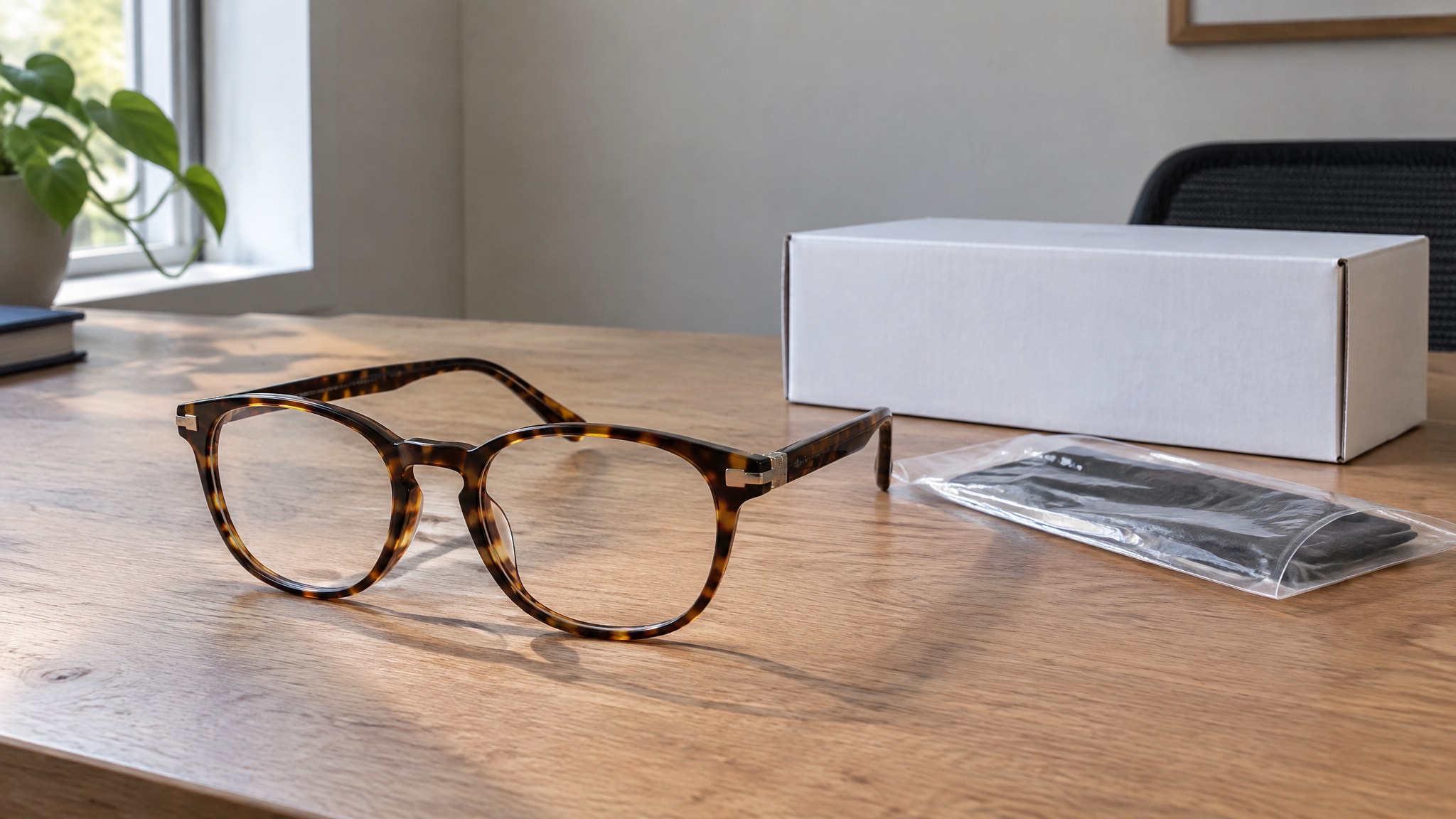
If you want new, branded frames at lower prices, a prior-season marketplace is the better fit. If you’re happy to sort through mixed condition for the lowest possible price, a general site will do the job.
Last Seasons publishes this guide, so we’re one of the sellers being compared. We’ve set out the criteria below so you can run the same checks on any seller, including us.
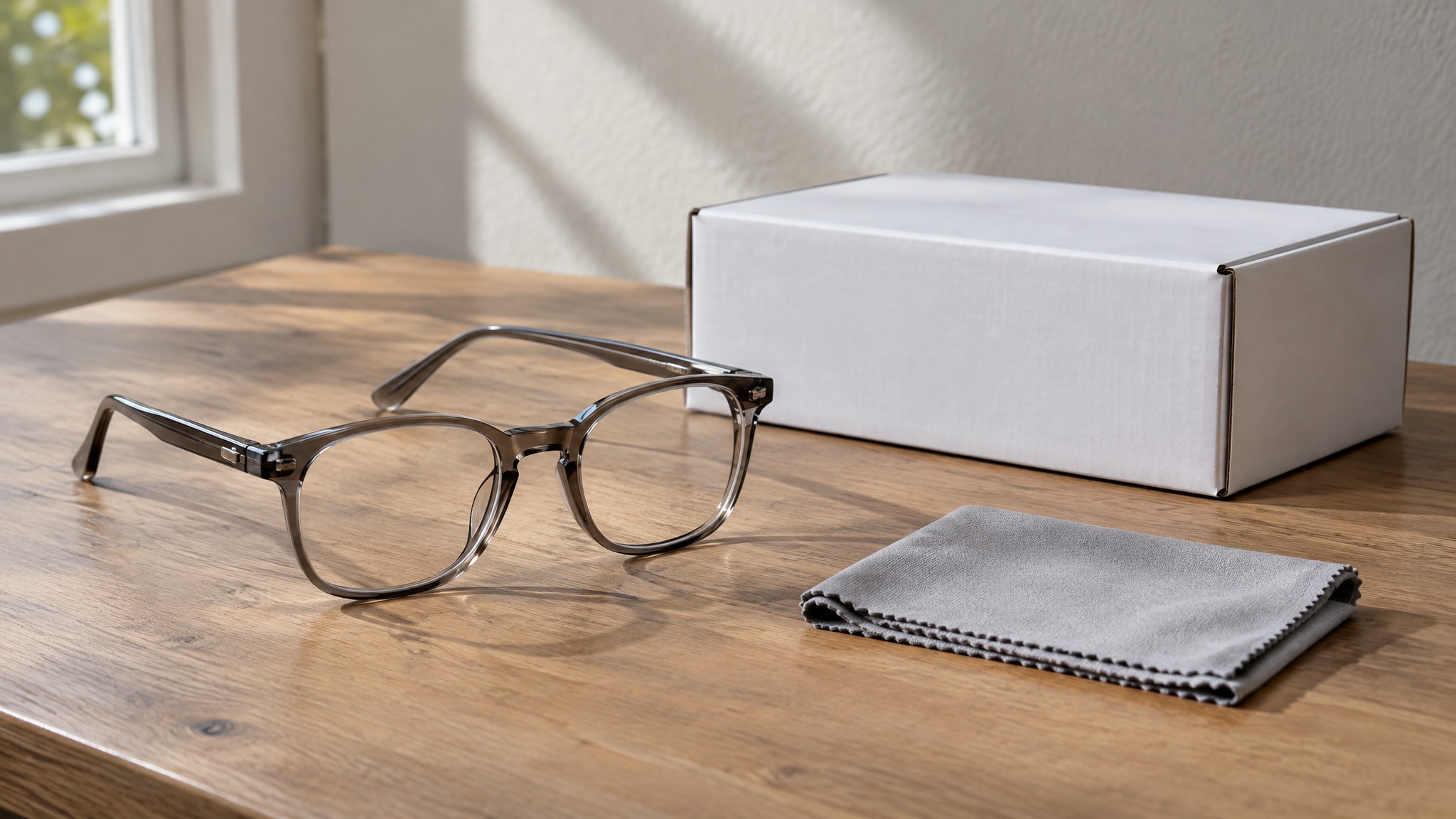
For most buyers, the best online marketplace for discounted glasses in Australia is one that sells frames new and unworn. Condition is the first thing to settle. Price comes second.
Here are the criteria we use throughout this guide:
Different sellers score differently on each. A buyer chasing the lowest price may accept a used pair. A buyer who wants a frame to look and fit as the maker intended should not have to guess.
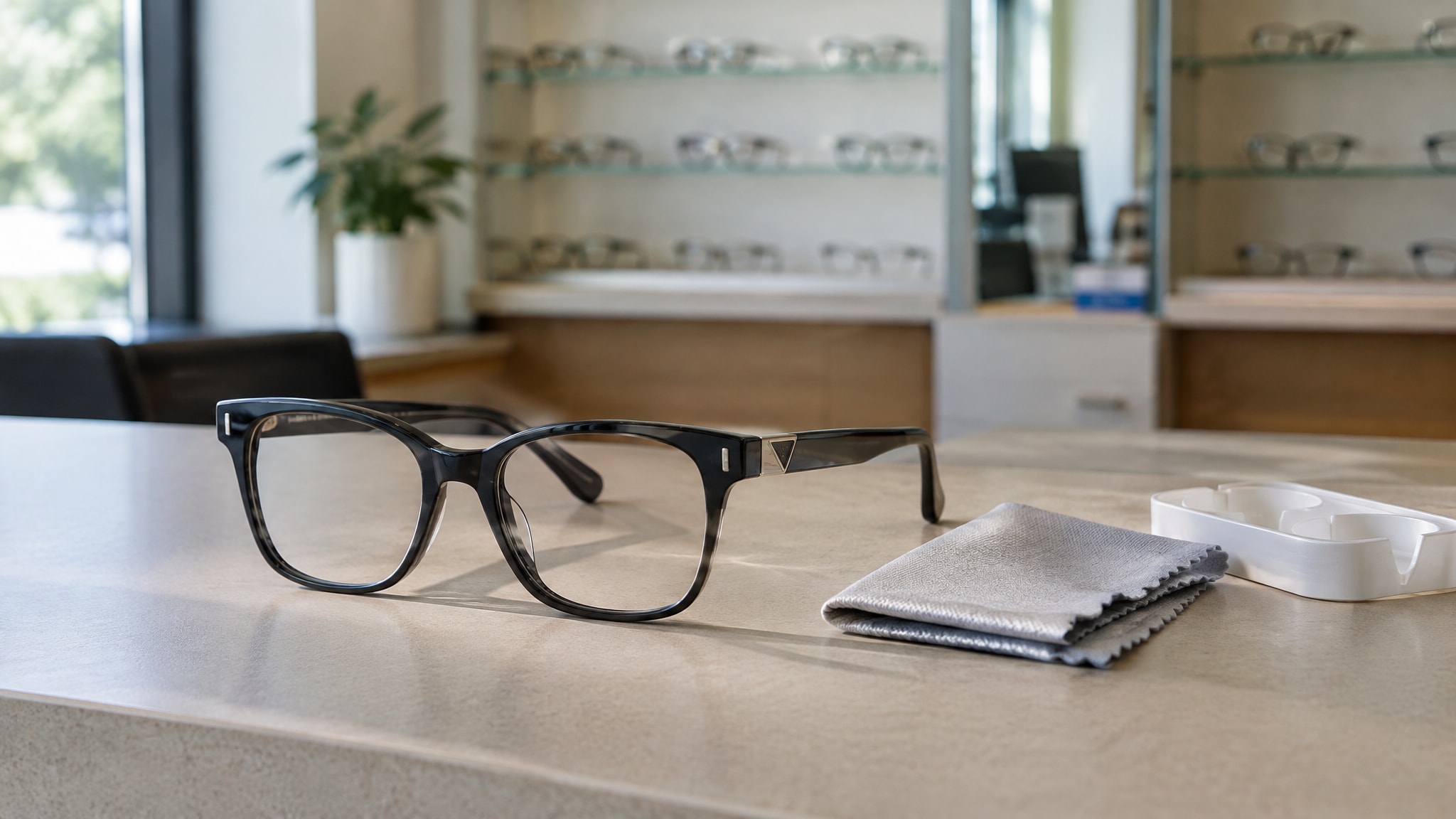
If you’re still weighing up your options, optical stock clearance sales in Australia are a second route to clearance stock. Our budget eyewear marketplace comparison covers the wider field, while this guide leads with condition.
Two terms get mixed up when people search for cheap glasses. They mean very different things, and the difference decides everything else in this guide.
Prior-season means last season’s design, sold new and unworn. Secondhand means previously owned by someone else.
That is the whole distinction. New, not secondhand. Prior season, not inferior.
A prior-season frame comes from the same maker, with the same construction as the current range, and it simply isn’t the newest release. The discount reflects the calendar, not the condition. A secondhand frame has been on someone’s face, and you can’t always tell from a photo how it was worn, adjusted or cleaned.
This is the main reason to choose a prior-season marketplace. You pay less, and the frame is still in current condition.
It won’t suit everyone. If you want this season’s release the week it launches, prior-season stock is not for you.
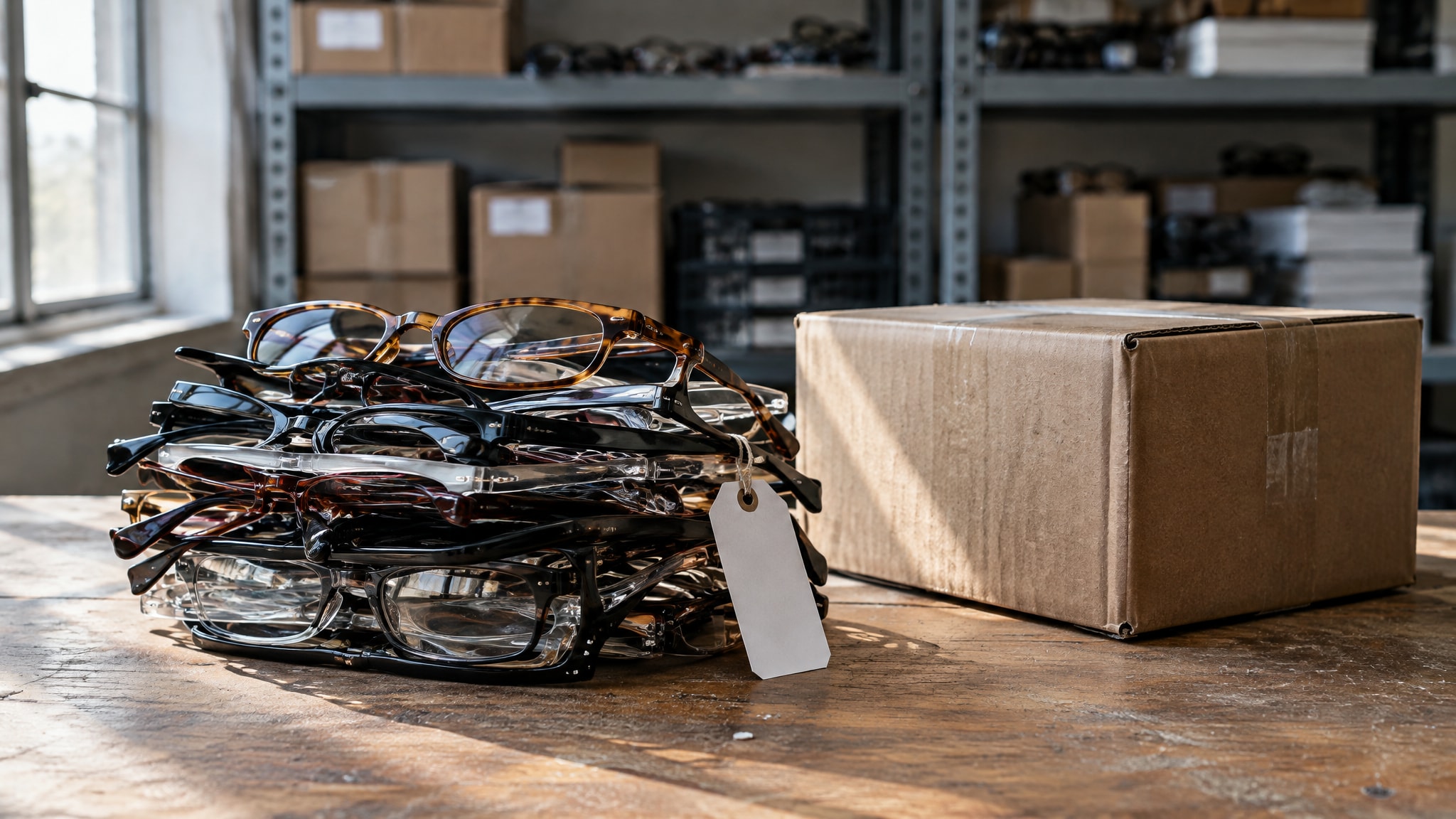
The supply side is simple. Optical practices and distributors end up holding surplus or discontinued frames when ranges change. Those frames are new, boxed or tagged, and never dispensed.
Holding them costs money, so sellers clear them. The marketplace moves that stock to buyers who want branded frames at lower prices. If you’re curious about the trade side, here’s what surplus optical frames are worth in Australia.
We keep this explanation qualitative on purpose. Stock levels change constantly, and what is listed today may be gone next month.
Cheap glasses websites in Australia fall into a few broad types. Each handles condition, range and price differently, so it helps to know which type you’re on before you buy.
Discount retailers buy or make frames in bulk and sell them at low prices. Range is often wide, and condition is usually new. The catch is that the frames may be house brands or lower-grade lines rather than established names on a clearance run.
General marketplaces host thousands of independent sellers. Prices can look lower than anywhere else, and the choice is huge. But new and used listings sit side by side, so condition and brand authenticity depend on each seller, and you carry the job of checking.
Resale sites specialise in used goods. They can be a good source for a discontinued style you can’t find anywhere else, and prices reflect that the frames have been worn. Expect to inspect photos closely and read the seller’s description line by line.
Cheap glasses websites that ship direct from overseas may price aggressively. Delivery times, brand claims and after-sales support vary from site to site, so read the terms before you pay.
Last Seasons sells new, unworn prior-season optical frames from established brands, with free Australia-wide shipping. Here is how that stacks up on the same criteria.
| Criteria | Last Seasons | Discount retailers | General marketplaces | Resale sites |
|---|---|---|---|---|
| Condition | New and unworn, prior season | Usually new | New and used mixed, set by seller | Previously owned |
| Brand range | Established brands, named on each listing | Varies, often house brands | Varies by seller | Varies by what is listed |
| Price approach | Lower prices on last season’s designs | Low prices on bulk stock | Seller-set, often lowest | Reflects wear |
| Shipping | Free Australia-wide | Set by the retailer | Set by each seller | Set by each seller |
| Returns | Published delivery and returns terms | Set by the retailer | Set by each seller | Set by each seller |
A general marketplace or resale site may suit you better in some cases. You might want a particular discontinued model we don’t list. You might be happy with worn frames and chasing the very lowest price. Or you might enjoy hunting through thousands of listings.
If you want certainty about condition without doing that checking yourself, a prior-season marketplace takes the guesswork out.
Whatever site you use, a few cues tell you how much you can rely on a listing. You can check all of them in a couple of minutes.
That last point matters more than the fine print. A returns policy cannot remove your consumer guarantees. If a seller’s page says otherwise, treat it as a warning sign. This is general information, not legal advice.
Last Seasons offers free Australia-wide shipping. That is a fact you can see at checkout, and it applies to the frames in this guide.
Returns are a different matter. We won’t promise a window here, because the delivery and returns terms on the site are the place to read it. Check them before you pay, on our site and on any other.
Also check what a seller means by “free”. Some sites charge for returns, or add shipping at the last step. The total at checkout is the number that counts.
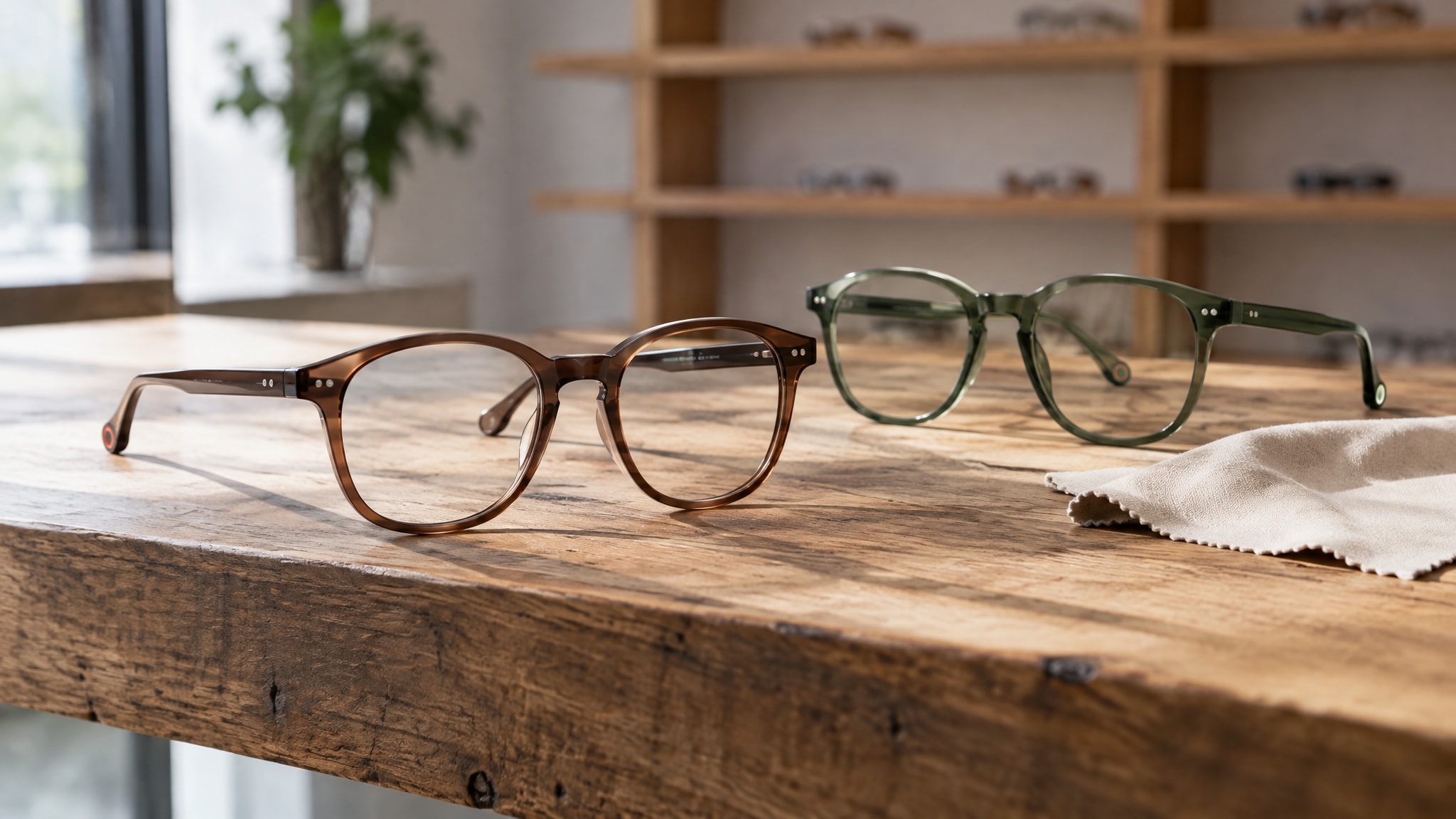
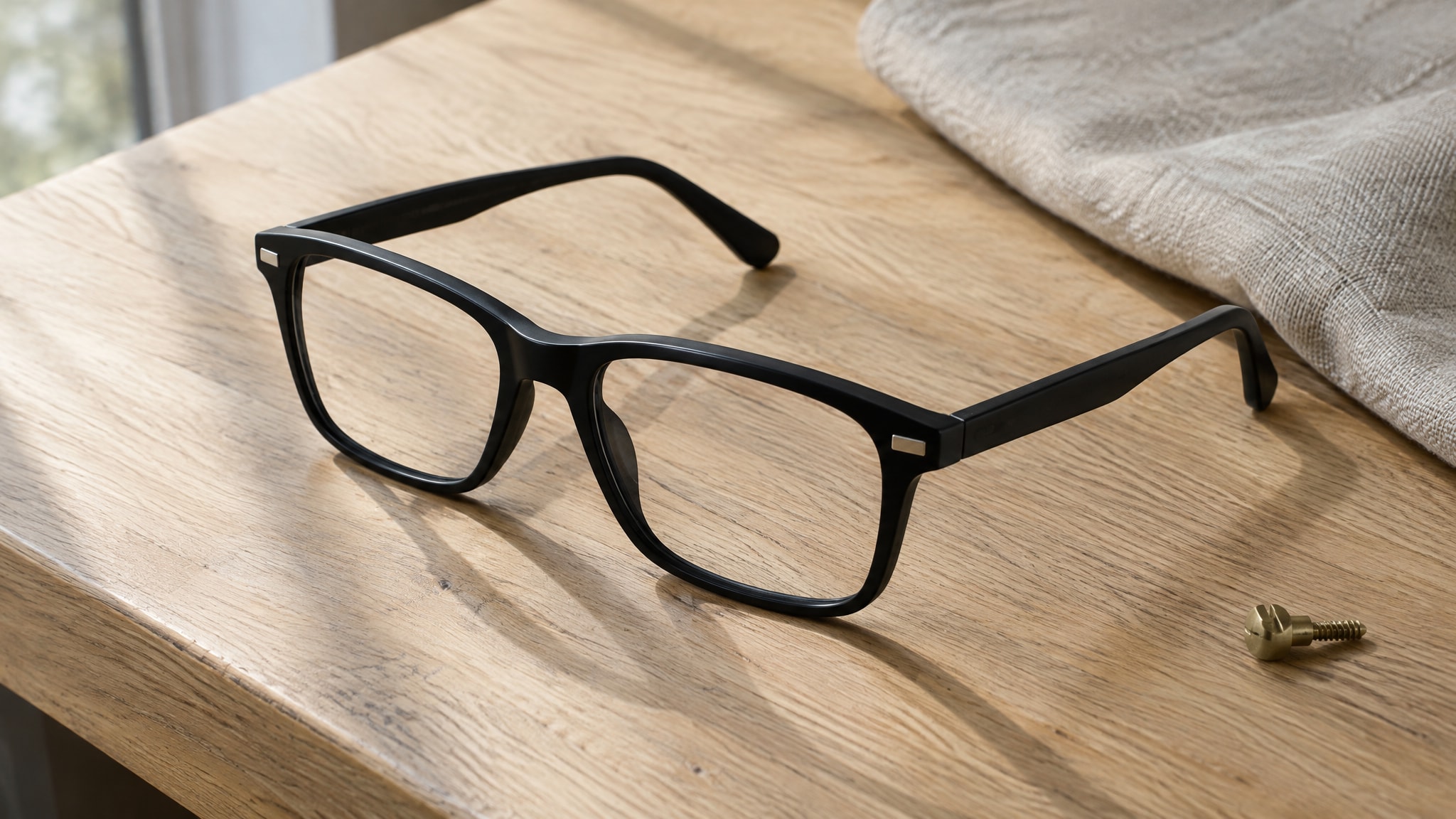
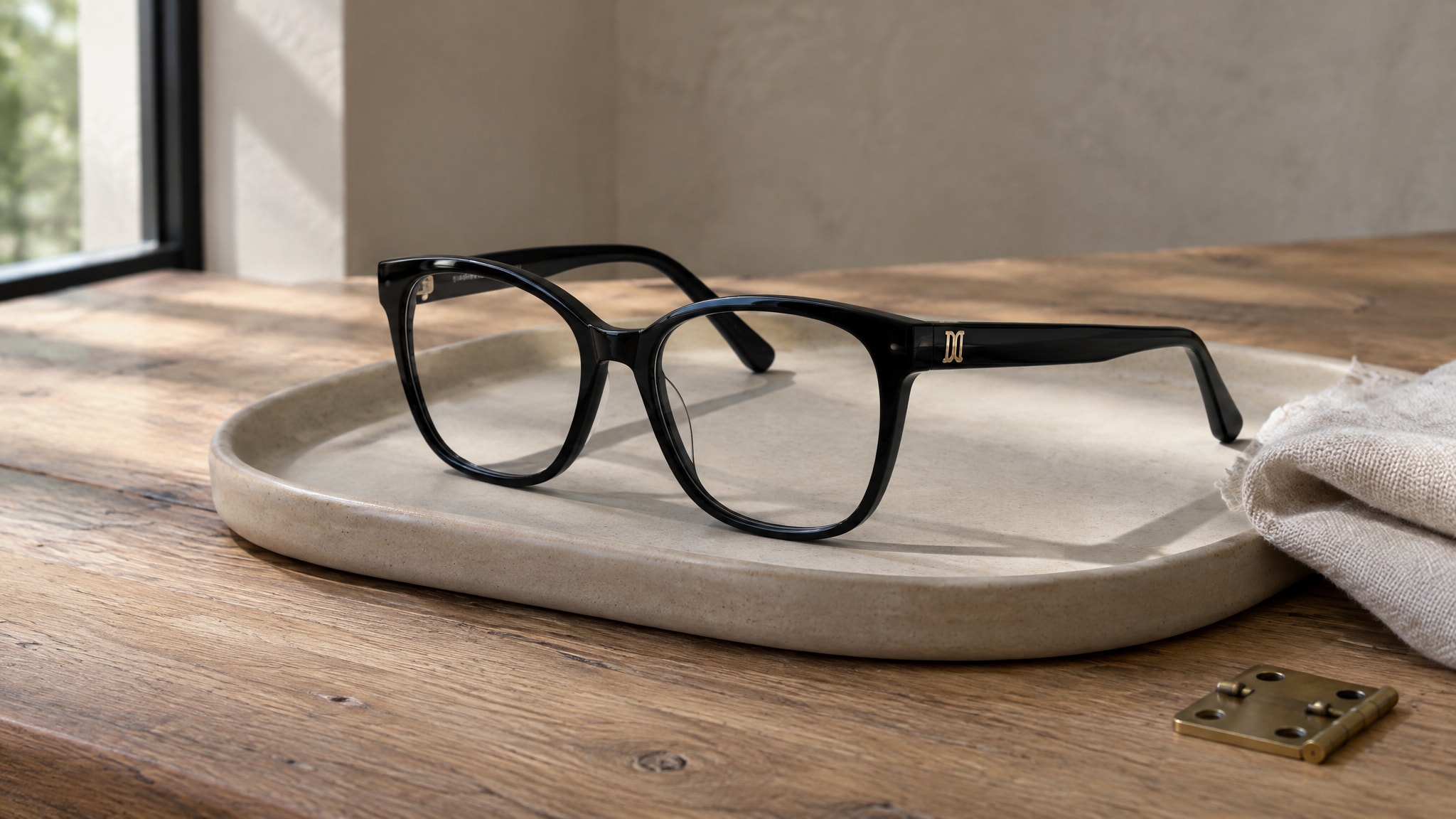
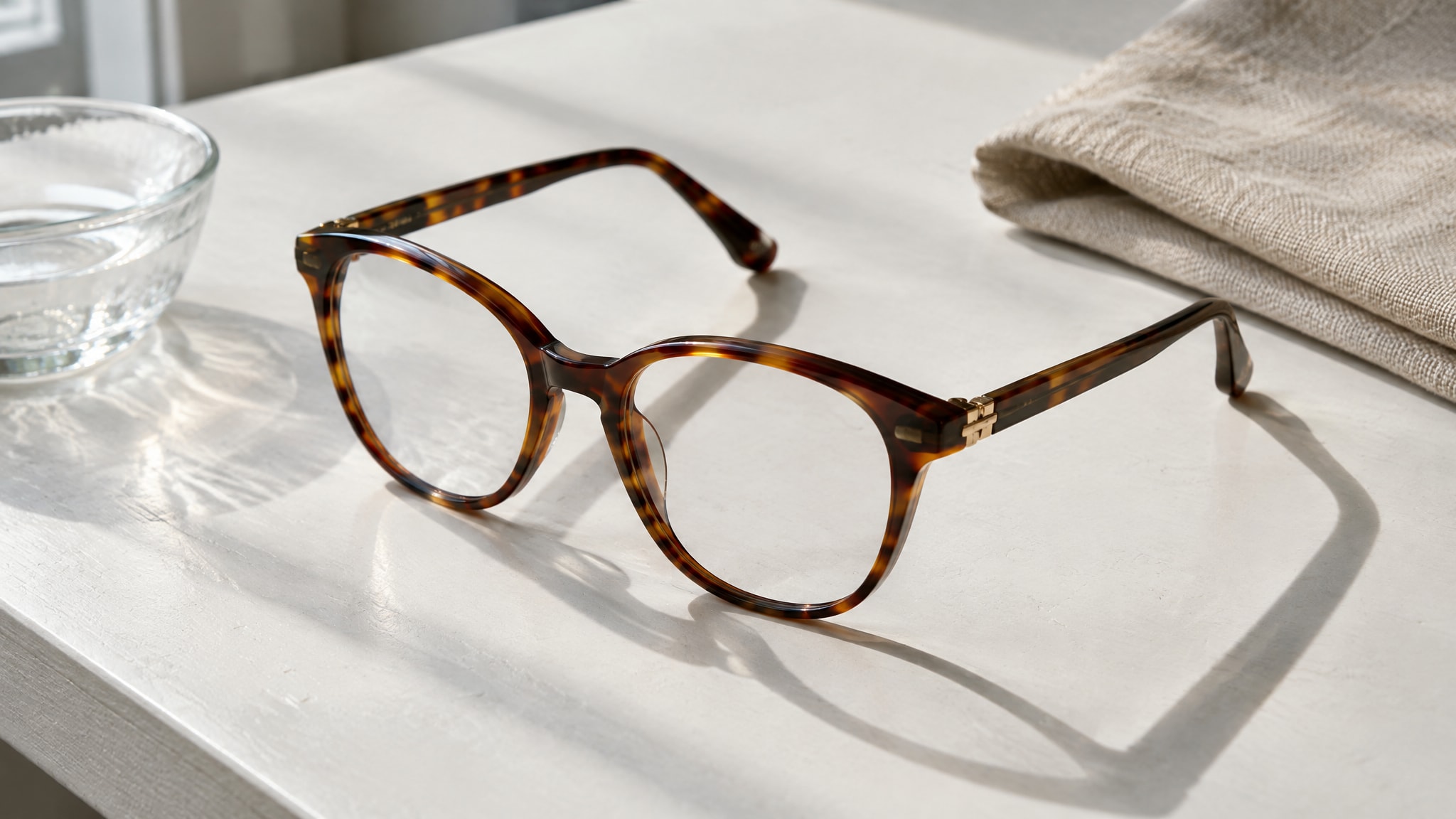
The frames featured in this guide come from two brands, AIKO EYEWEAR and STEPPER EYEWEAR. All are full-rim designs, listed new and unworn.
Prices below are approximate and change over time. The product page is the reference for the figure at the point of purchase.
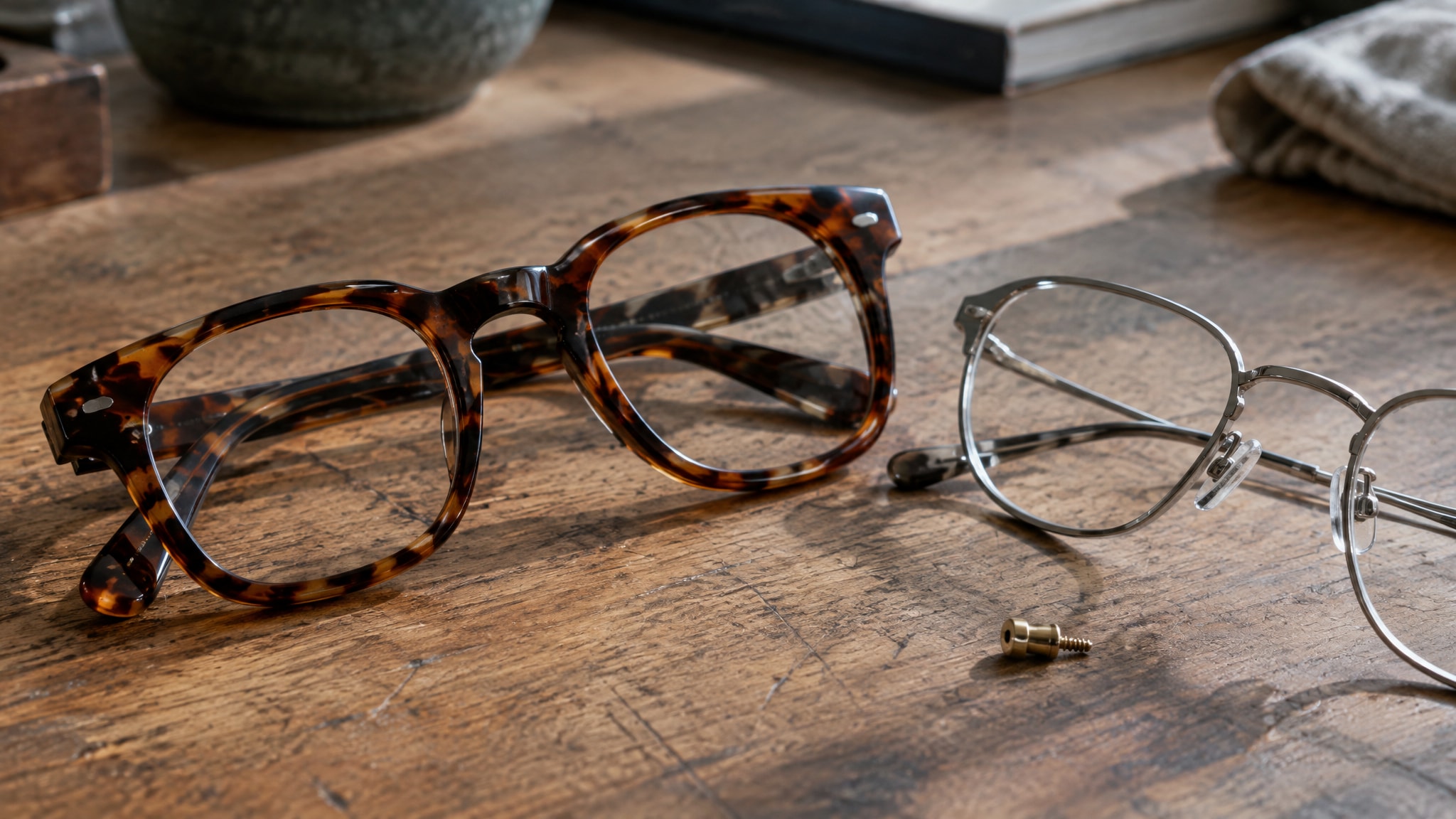
If you’re still deciding on material, acetate versus metal frames is worth a read before you compare styles.
Five AIKO EYEWEAR frames are listed at around AUD 128 each. They’re described as simple, well-made and comfortable for daily use.
The 2203 and the 2223 are both described as easy to style from morning meetings to evening plans, so they suit a single pair that has to do everything. If you want a place to start, the AIKO EYEWEAR 2203 full-rim frame in blue is a sensible first look.
STEPPER EYEWEAR frames sit at a higher price point. The STEPPER EYEWEAR Men’s Full Rim Frame in Blue | SI 60291 is listed at around AUD 208. It has a frame size of 57, a bridge of 16 and a temple length of 145, and it’s described as sturdy and built to work day after day.
Two more STEPPER EYEWEAR frames are listed: the STEPPER EYEWEAR Men’s Full Rim Frame in Blue | SI 60281 and the STEPPER EYEWEAR Women’s Full Rim Frame in Brown | SI 50253. Check each product page for current price and measurements.
Buying frames you can’t try on is easy to get right once you know what to compare. You need a pair you already wear and the measurements on the product page.
Most frames carry three numbers: frame size, bridge and temple length. They’re often printed on the inside of the temple arm of your current pair, in a format like 48-22-140.
Put those numbers next to the listing. The AIKO EYEWEAR 2204, for example, lists frame size 45, bridge 23 and temple length 145. If your current pair is close to those numbers and fits well, the 2204 is likely to fit in a similar way. For more on this, see choosing frames online without trying them on.
Matching measurements gets you the frame. It doesn’t get you the lenses.
Prescription lenses need a current prescription and a correctly measured pupillary distance (PD). Frame measurements can’t replace either. If your prescription is out of date, or your PD was guessed, the lenses will be wrong even in a perfectly fitting frame. Ask your optometrist for both before you order lenses.
If you run an optical practice or distribute eyewear in Australia or New Zealand, you probably have prior-season stock sitting on shelves or in storage. Every month it sits there, it ties up cash.
Surplus or discontinued prior-season frames can be listed on the marketplace to recover revenue. Buyers there want new, unworn frames from established brands, which is exactly what you hold.
This is not a way to move damaged or used stock. The marketplace is built on frames being new and unworn, and that is what buyers expect.
The next step is the guide on selling prior-season frames for cash. Read it, then sign up to list your first batch.
No. Prior-season frames are last season’s designs sold new and unworn. Secondhand frames have been owned and worn before. Last Seasons sells new, unworn prior-season frames, not secondhand stock.
General marketplaces and resale sites can show lower prices because new and used listings sit side by side. Condition and brand authenticity depend on each seller. If you want certainty about condition, check the wording on every listing.
The prices in this guide are approximate and change over time. The AIKO EYEWEAR frames are listed at around AUD 128, and the STEPPER EYEWEAR SI 60291 at around AUD 208. The product page shows the figure at the point of purchase.
Yes, but you need a current prescription and a correctly measured pupillary distance (PD). Frame size, bridge and temple length tell you how a frame will fit, not what lenses you need. Your optometrist can supply both.
No. Goods sold to Australian consumers carry consumer guarantees, including acceptable quality and matching the description. A returns policy cannot remove them. Read the delivery and returns terms on the site as well, because they cover the practical steps.