Collage of three people wearing glasses: a young woman with black frames on the left, an older man with gray hair and beard in the center, and a younger man with round metal frames on the right.

Titanium, Acetate or TR90? A Plain-English Guide to Glasses Frame Materials

May 28, 2026

Glasses frame materials decide how light, durable and comfortable your eyewear feels every single day. Titanium, acetate and TR90 are the three names you will see most often. Yet product pages rarely explain what they actually mean for you. The material is not just a line on a spec sheet. It shapes the weight on your nose, the colours on offer and how long your frames last. This guide translates the jargon into plain English. By the end, you will choose glasses frame materials with total confidence.

Why Glasses Frame Materials Matter More Than You Think

Two frames can look almost identical, yet feel completely different to wear. The material is the reason. It controls weight, flexibility, durability and even whether the frame irritates sensitive skin. Furthermore, material affects price, because premium metals cost more to work with than moulded plastics. So before you fall for a shape, it pays to know what it is made from.

The good news is that you only need to understand a handful of materials. Three of them — titanium, acetate and TR90 — cover the vast majority of quality frames. Each one has a clear strength and a clear ideal wearer. With that in mind, let us look at what each material does best

Titanium: Premium, Light and Tough

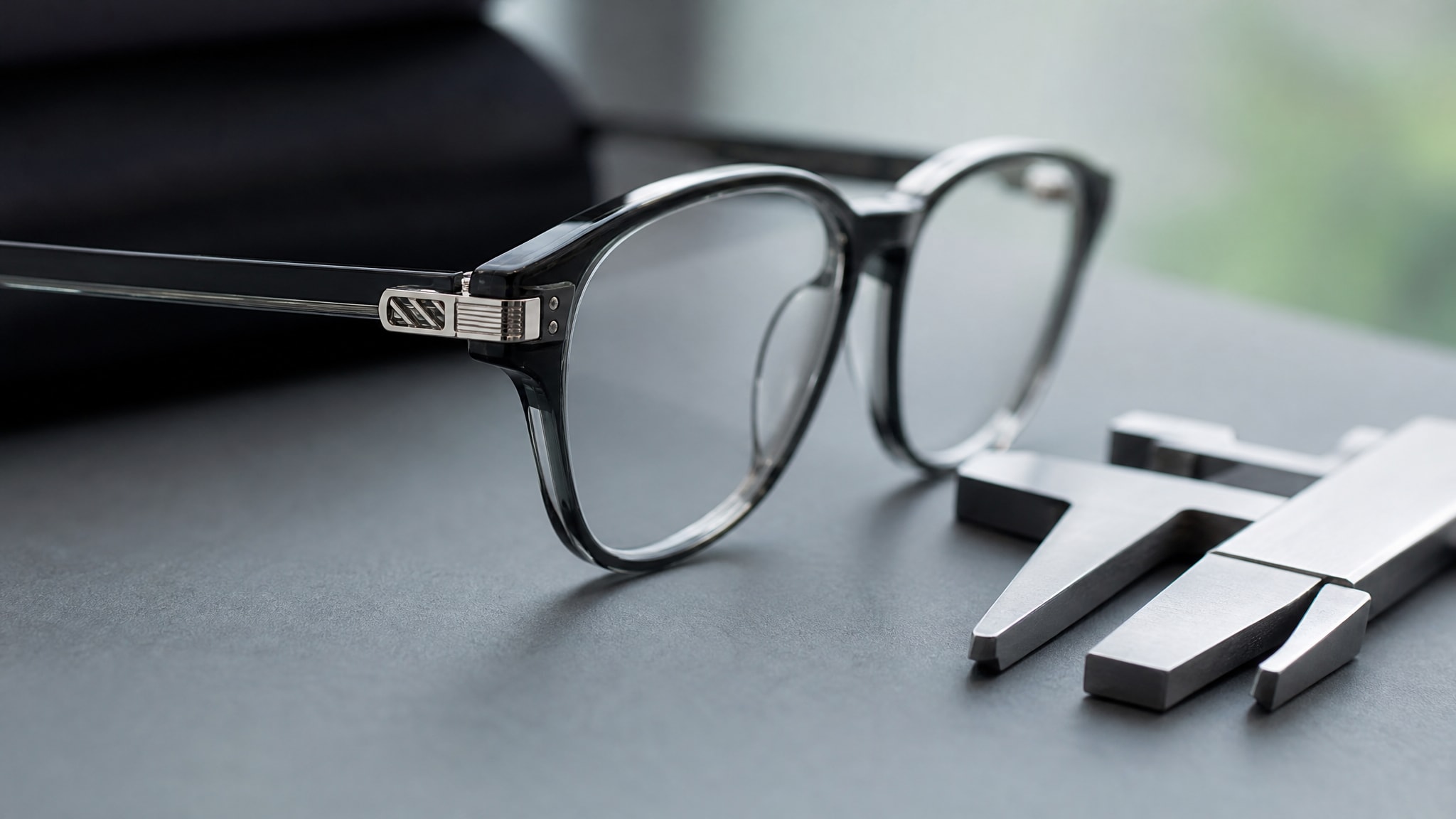
Titanium glasses frames sit at the premium end, and they earn their reputation. Titanium is remarkably strong. Even so, it weighs around half as much as stainless steel. It also resists corrosion and rust, so it copes well with sweat and humidity. Most importantly, titanium is hypoallergenic. That makes it ideal for anyone with sensitive skin or a metal allergy.

Because it is so light, titanium suits people who wear glasses all day. The frame almost disappears on the face after a few minutes. The one trade-off is price, since titanium costs more to produce than other materials. However, buying previous season titanium glasses frames in Australia gives you that premium feel without the premium price tag.

Choose titanium if you want

  • The lightest possible metal frame for all-day comfort
  • A hypoallergenic option for sensitive skin
  • Strength and corrosion resistance that lasts for years
  • A sleek, minimalist, professional finish

Acetate: Colour, Character and a Premium Feel

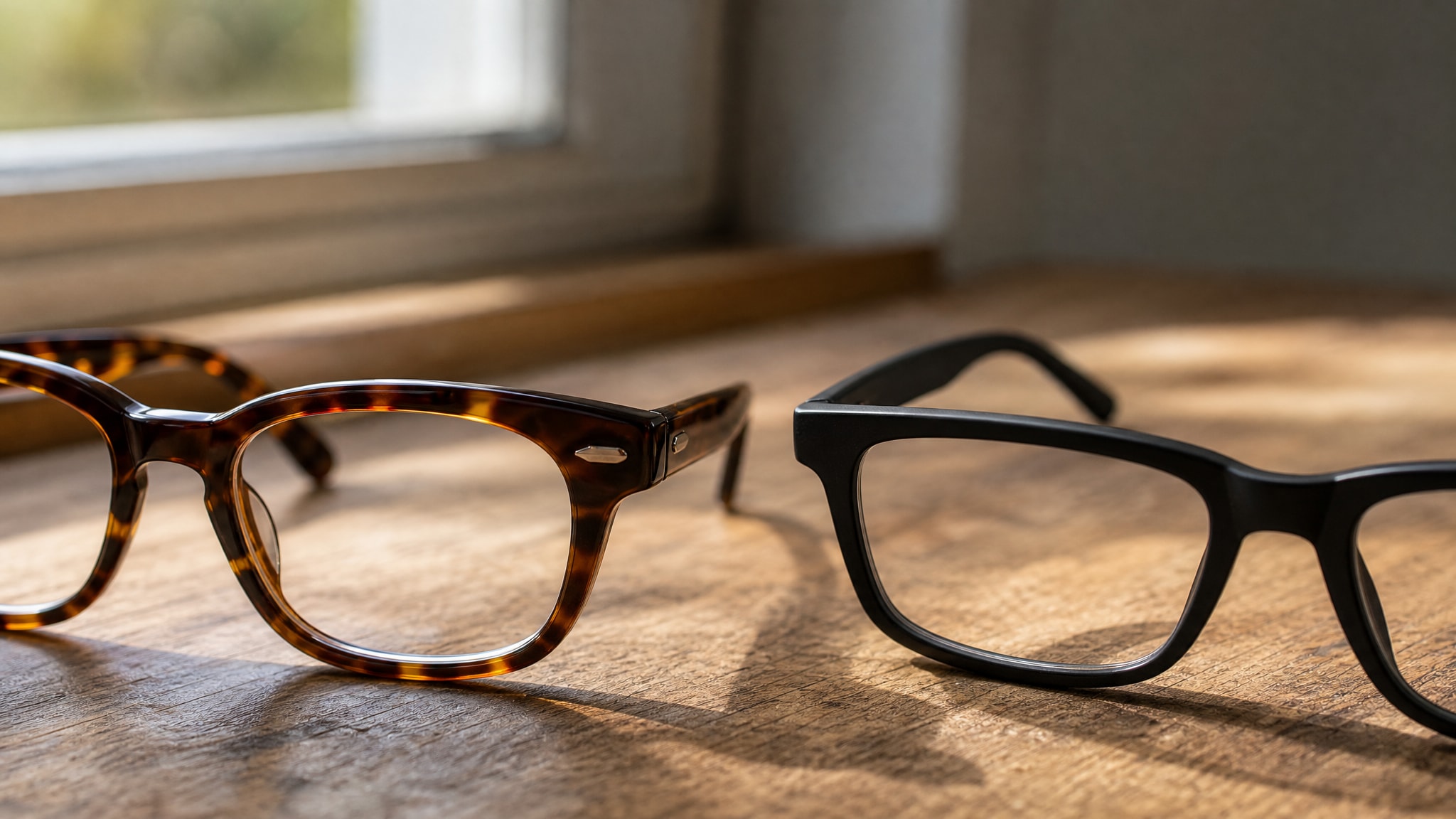
Acetate is a plant-based plastic, and it is the go-to material for bold, colourful frames. Unlike cheap moulded plastic, acetate is layered and polished. This gives it real depth and a genuine quality finish. As a result, acetate produces rich tortoiseshell patterns, translucent tones and striking two-colour combinations. Other materials simply cannot match that range of colour and character.

Acetate frames feel substantial, and many wearers love that grounded, premium weight. On the other hand, that extra weight can build up during a long day at a screen. Acetate is also more rigid than some materials. So an optician may need to fine-tune the fit for total comfort. For sheer style and personality, though, acetate is very hard to beat.

Choose acetate if you want

  • Bold colours, patterns and a fashion-forward look
  • A premium, substantial feel in the hand
  • A hypoallergenic alternative to basic plastic
  • Frames with genuine character and depth

TR90: Light, Flexible and Almost Unbreakable

TR90 is a modern thermoplastic, and it is the practical all-rounder of the group. It is incredibly light — roughly half the weight of acetate for the same frame. It is also a memory material. That means it flexes under pressure and springs back to its original shape.

Consequently, TR90 handles drops, bends and rough days far better than most frames. This flexibility makes TR90 a brilliant choice for active wearers and for children. Moreover, it resists heat and impact, so it lasts well under daily wear and tear. The look is more casual and sporty than acetate. Even so, TR90 still comes in plenty of colours and finishes. For many people, it offers the best balance of comfort, durability and price.

Choose TR90 if you want

  • Featherlight frames you barely notice
  • Flexible, impact-resistant glasses for active lifestyles
  • A durable, low-worry option for kids’ frames
  • Comfort and resilience at a smart price

A Quick Look at Other Materials

Beyond the big three, you will also come across stainless steel and mixed metal alloys. Stainless steel offers slim, classic designs at an affordable price. It also resists corrosion well and suits anyone after a timeless metal look. Metal alloys keep costs down while still giving you that metal finish. Each material has its place. Even so, titanium, acetate and TR90 remain the three most worth understanding before you buy.

Glasses Frame Materials at a Glance

To make your decision easier, here is how the main glasses frame materials compare across the features that matter most day to day.

MaterialWeightDurabilityBest For
TitaniumVery lightExcellentAll-day wear, sensitive skin
AcetateHeavierGoodBold colour and style
TR90LightestExcellent (flexible)Active wearers and kids
Stainless steelModerateVery goodClassic looks on a budget

Choosing the Right Glasses Frame Materials for You

There is no single best material — only the best one for your needs. If comfort and sensitive skin top your list, choose titanium. If you want bold colour and character, reach for acetate. If you need lightweight, flexible durability, TR90 is your match. Think about how, where and how often you wear your glasses. Once you do, the right choice quickly becomes clear.

It also helps to weigh up your priorities honestly. Some wearers will happily pay more for the featherlight comfort of titanium. Others care most about a bold, colourful look and will love acetate. Active wearers and parents often land on TR90 for its toughness. None of these choices is a compromise on quality — each is simply the right tool for a different job.

Whichever material suits you, the smart move is choosing previous season. You get the same quality frame in titanium, acetate or TR90, at a far better price than current season retail. Explore titanium glasses frames and the full range at Last Seasons, and feel the quality difference for yourself.
Related Blogs

Mother and daughter smiling as they try on glasses in an eyewear store with display shelves in the background.

Buying Children’s Glasses Frames Online: A Parent’s Guide to Fit, Durability and Value

June 1, 2026

Children’s glasses frames need to do three things at once — fit a small face, survive the playground, and not cost a fortune. Buying online makes all three easier than you might think. Many parents worry about choosing frames their child cannot try on first. That worry grows when kids seem to grow out of things and break them just as fast. The good news is that a few simple checks remove the guesswork. This guide walks you through fit, durability and value, so you can buy children’s glasses frames online with real confidence.

Why Buying Children’s Glasses Frames Online Makes Sense

Buying children’s glasses frames online gives you more choice and far better prices than a high street store. You can compare styles calmly at home, rather than rushing a restless child through a shop. Moreover, online ranges are wider. So you are more likely to find a frame your child actually likes and will happily wear. There is no pressure and no queue, just time to choose well.

Online shopping does ask one thing of you, though. You need to know what to look for before you buy. Fortunately, the key factors are simple, and we will cover each one in turn. So let us start with the single most important factor — fit.

Getting the Fit Right on Children’s Glasses Frames

Fit matters more for children than almost anything else. A frame that is too big slips down the nose constantly. One that is too small pinches and leaves red marks. Either way, an uncomfortable child stops wearing their glasses. Fortunately, every frame lists its measurements. Matching those numbers is straightforward once you know the basics.

The three measurements that matter

  • Lens width — the width of each lens, and the biggest factor in overall frame size
  • Bridge width — the gap between the lenses that sits on the nose
  • Temple length — the arms that run from the front to behind the ears

The easiest way to find the right size is to measure a pair your child already wears well. Check the inside of the arm for the printed numbers. Then match them to the listings online. For a full walkthrough, our frame size guide explains exactly what each measurement means.

If you do not have a well-fitting pair to measure, do not worry. Frames are also grouped by age range, which gives you a sensible starting point. From there, the measurements help you fine-tune the choice. A little care at this stage saves a lot of frustration later.

Durability: Frames That Survive Real Childhood

Children are hard on their glasses, so durability is not optional. Look for flexible, impact-resistant materials that bend rather than snap. TR90 is an excellent choice here. It is lightweight, springs back into shape and shrugs off drops. Stainless steel is another sturdy option for older children who treat their belongings more gently.

In addition, spring hinges are well worth seeking out. These let the arms flex outward without breaking. As a result, frames survive being pulled on and off in a hurry far better. The right material and hinge combination can dramatically extend the life of a pair of kids’ frames. That means fewer replacements and less stress for everyone.

Durability checklist for kids’ eyewear frames

  • Flexible materials such as TR90 that resist snapping
  • Spring hinges that flex instead of breaking
  • Lightweight frames that stay comfortable all day
  • A sturdy case to protect frames when not worn

Value: Why Smart Parents Buy Previous Season Children’s Glasses Frames

Children outgrow frames quickly, and they break them even faster. Paying full current season retail therefore makes little sense. This is exactly where previous season frames shine. You get the same quality brands and the same durable materials. The only difference is that the frames come from an earlier release, at a significantly lower price.

Consequently, previous season children’s glasses frames let you buy a quality pair without the sting of full retail. If your child grows out of them, replacing them costs far less. The same goes if they break a pair at school. For parents, that is genuine peace of mind. It is also a much friendlier outcome for the family budget — quality eyewear without the premium price.

Helping Your Child Like Their Glasses

A frame only works if your child actually wears it. So style matters more than many parents expect. Let your child help choose the colour and shape where you can. A pair they feel good in is a pair they will keep on. Bright colours, fun patterns and favourite shades all help younger children warm to glasses quickly.

For older children and teens, the priority often shifts towards looking grown-up. Subtler colours and slimmer frames tend to win them over. Either way, involving your child in the choice makes a real difference. It turns glasses from a chore into something they are happy to own. That alone can save you countless morning battles.

A Quick Pre-Purchase Checklist

Before you add a pair to your cart, run through these final checks. They take a minute and save a lot of hassle later.

  • Have you matched the frame measurements to a well-fitting pair?
  • Is the material flexible and impact-resistant?
  • Does the frame have spring hinges where possible?
  • Does your child like the colour and style enough to wear it?
  • Are you choosing previous season to maximise value?

Shop Smarter for Your Child’s Next Pair

Buying children’s glasses frames online does not have to be stressful. Get the fit right, choose durable materials and shop previous season. Do that, and you will land a quality pair your child loves for far less. Browse the children’s glasses frames range at Last Seasons today, and give your child quality eyewear at a smarter price.

With free shipping Australia-wide and quality brands at previous season prices, it is the easy, value-smart way to sort your child’s next pair. That is the Last Seasons advantage for busy parents — real quality, never second-rate, always at a better price.


READ MORE

Full Rim vs Semi-Rimless vs Rimless: Which Frame Type Is Right for You?

May 26, 2026

The full rim vs semi rimless vs rimless question comes down to one thing — how much frame sits around your lenses. That single choice shapes the look, weight and durability of your glasses. Most shoppers never think about rim type until they start browsing online. Yet it quietly affects comfort, price and how bold your frames look. Understanding the difference helps you shop with confidence rather than guesswork. This guide breaks down all three frame types, shows who each one suits, and helps you pick the right style before you browse the range.

Full Rim vs Semi Rimless: What Rim Type Actually Means

Rim type simply describes how much of the frame surrounds each lens. Full rim frames enclose the lens completely. Semi-rimless frames hold the lens with a partial frame and a fine nylon cord. Rimless frames skip the surround entirely and attach the arms straight to the lens. Each approach creates a distinct look and a different wearing experience.

The rim type you choose touches almost everything about your glasses. It changes how heavy they feel, how much they stand out and how carefully you need to treat them. It even affects which prescriptions work best. So it pays to understand all three before you decide. Once you do, choosing between them becomes far easier. Let us walk through each one in turn.

Full Rim Frames: Bold, Durable and Versatile

Full rim frames are the most common style, and for good reason. The frame wraps fully around each lens. This gives the glasses real strength and a clear visual presence on your face. Because the frame holds the lens securely, full rim styles handle daily knocks better than the alternatives. They also come in the widest range of colours, materials and shapes, so you are never short of options.

Additionally, full rim frames suit anyone who wants their glasses to make a statement. The thicker frame line draws attention to your eyes and adds definition. As a result, they work especially well for fashion-forward looks. They also suit stronger prescriptions, because the frame hides thicker lens edges neatly. For many wearers, that combination of durability and style makes full rim the natural starting point.

Who full rim frames suit best

  • Anyone who wants a bold, defined look
  • People with stronger prescriptions, as the frame conceals lens thickness
  • Active wearers who need durability from their glasses frames
  • Shoppers who want maximum colour and style choice

Semi-Rimless Frames: The Balanced Middle Ground

Semi-rimless frames, sometimes called half-rim frames, hold the lens along the top with a visible frame. A near-invisible nylon cord then secures the lower edge. This clever design gives you some of the structure of a full rim frame. At the same time, it carries far less visual weight. The result feels light and looks understated.

In particular, the full rim vs semi rimless choice often comes down to how much frame you want on show. Semi-rimless frames keep the eyes open and the face uncluttered. They strike a balance that many professionals love. However, they do reward a little extra care. The lower nylon cord can wear over time and may need replacing eventually. For most wearers, that small trade-off is well worth the lighter, cleaner look.

Who semi-rimless frames suit best

  • Professionals who want a smart but subtle look
  • Wearers who find full rim frames too heavy or bold
  • Anyone after a modern, understated style that still has shape

Rimless Frames: Light, Discreet and Barely There

Rimless glasses frames remove the surround completely. The arms and bridge mount directly onto the lenses. As a result, almost nothing sits on your face. This makes rimless frames the lightest option available and the most discreet. Many wearers genuinely forget they have them on.

Rimless glasses frames in Australia appeal strongly to anyone who wants their features to lead, rather than their eyewear. They flatter a clean, minimalist style. They also suit lighter prescriptions especially well, since thinner lenses hold their shape better at the exposed edge. That said, rimless frames do need gentle handling. Pair them with a sturdy case and they will serve you beautifully for years.

Who rimless frames suit best

  • Minimalists who want their glasses to disappear
  • Wearers who prioritise lightweight comfort above all
  • People with lighter prescriptions, which suit the exposed lens edge
  • Anyone wanting a refined, professional finish

Full Rim vs Semi Rimless vs Rimless: A Quick Comparison

To make the full rim vs semi rimless vs rimless decision simpler, here is how the three styles stack up across the things that matter most.

FeatureFull RimSemi-RimlessRimless
Visual weightBoldModerateMinimal
DurabilityHighestGoodGentlest handling
Weight on faceHeaviestLightLightest
Style choiceWidest rangeModerateRefined, fewer options
Best prescriptionStrong to mildMild to moderateLighter lenses


Full Rim vs Semi Rimless: How to Make Your Choice

Start with how you want your glasses to feel and look. If you want durability and a strong style, choose full rim. If you want a lighter, smarter look with some structure, semi-rimless is your sweet spot. If you want barely-there comfort and a refined finish, rimless wins. Your prescription matters too, so factor in lens thickness alongside style.

It also helps to think about your daily routine. Active wearers and anyone hard on their glasses lean towards full rim for its toughness. Desk-based professionals often prefer the lighter feel of semi-rimless or rimless. There is no single right answer — only the rim type that fits your face, your prescription and your lifestyle best. Try picturing how each style would suit a typical day, and the right choice usually becomes obvious.

Once you know your preferred rim type, you can shop with real confidence. Browse the full range of men’s eyewear frames, women’s frames and sunglasses at Last Seasons. There you will find quality previous season frames in every rim type, at a smarter price.

Best of all, choosing previous season means you get the same quality frame at a fraction of current season retail. That is the insider advantage — top brands, every rim type, unbeatable value, with free shipping right across Australia.


READ MORE

How to Read Eyewear Frame Measurements: Frame Size, Bridge and Temple Length Explained

April 13, 2026

If you’ve ever turned a pair of glasses over and noticed a string of numbers on the inside of the arm something like 52 17–140, you’ve seen eyewear frame measurements. For most people, those numbers are a complete mystery. Once you understand what they mean, however, choosing the right eyewear frames online becomes significantly easier. In fact, you’ll never buy a frame that doesn’t fit your face again.

So, this guide explains every eyewear frame measurement you need to know, how to find your own sizing, and how to use it all when shopping for frames in Australia.

What are the three key eyewear frame measurements you need to know?

Every pair of glasses has three core measurements printed on the frame, usually on the inside of one temple arm. They are expressed in millimetres and always appear in the same order:

  • Lens width (eye size)
  • Bridge width
  • Temple length

Together, these three numbers tell you how wide the frame sits, how it spans your nose, and how far the arms extend back toward your ears. Getting all three right is what makes the difference between a frame that fits comfortably all day and one that pinches, slides or sits unevenly.

Lens width: the most important measurement

Lens width, sometimes called eye size, measures the horizontal width of a single lens in millimetres. It typically ranges from around 44mm for smaller frames to 58mm or more for larger or oversized styles. Most adult frames fall between 48mm and 54mm.

This measurement does not tell you the total width of the frame that’s the lens width doubled, plus the bridge width. However, lens width is your best starting point because it reflects the overall proportion of the frame on your face.

Standard eyewear frame measurements for lens width

As a general guide:

  • 44–48mm — small frames, often suited to narrower faces or children
  • 49–52mm — medium frames, the most common adult range
  • 53–56mm — standard to large frames, suited to wider faces
  • 57mm and above — large or oversized frames

Additionally, If you already own a pair of glasses that fit well, you can read the lens width directly from the inside of the arm and use it as your reference size when shopping for eyewear frames online.

Bridge width: how the frame sits on your nose

The second of the three eyewear frame measurements is bridge width. The bridge width measures the distance between the two lenses across the nose piece. It typically ranges from 14mm to 24mm, with most adult frames sitting between 16mm and 20mm.
Getting the bridge width right is crucial for comfort. A bridge that’s too narrow will pinch your nose and sit too high on your face. A bridge that’s too wide will cause the frame to slide down constantly and create pressure points behind the ears as the arms compensate.

To find your ideal bridge width, measure the distance across the bridge of your nose at the point where you want the frame to rest. A ruler or soft tape measure will do the job. Then compare that figure to the bridge width on frames you’re considering.

If you wear glasses for prescription use, the bridge fit also affects lens centration the alignment of the optical centre of the lens with your pupil. An ill-fitting bridge can move the optical centre off-axis and cause visual distortion, headaches or eye strain even with a perfect prescription.

Temple length: how far the arms extend

The third eyewear frame measurement is temple length. The temple length, sometimes called arm length measures from the front hinge to the tip of the arm, including the bend that hooks behind your ear. It is typically between 130mm and 150mm, with 140mm being the most common adult length.

Temple length affects how securely the frame grips your head. Arms that are too short will create pressure on the sides of your head. Arms that are too long will leave the frame loose and prone to slipping. The bend at the end of the arm, called the temple tip, should begin just behind your ear rather than sitting directly on top of it or extending past the earlobe.

Children’s frames typically have shorter temple lengths of 115mm to 130mm. In particular, if you’re buying children’s glasses frames in Australia, checking the temple length is especially important. This is because frames sized for adults will be uncomfortable and sit poorly on a child’s face, regardless of lens width.

How to read the full measurement string

Taking the example 52 17–140:

  • 52 — lens width is 52mm
  • 17 — bridge width is 17mm
  • 140 — temple length is 140mm

The total frame width would be approximately 52 + 52 + 17 = 121mm. This is the span from the outermost edge of one lens to the outermost edge of the other, which should roughly match the width of your face at the temples.

How to find your own measurements

The easiest method is to check a pair of glasses you already own and know fit well. Find the numbers on the inside of the arm and use them as your baseline.

If you’re starting fresh, a few simple measurements at home will get you there:

  • Lens width: measure the widest point of one lens on your current frames
  • Bridge: measure the gap between the inside edges of the two lenses
  • Temple length: measure from the front hinge along the arm to the tip

You can also ask your optometrist at your next appointment they will have your measurements on file from your last fitting.

Why measurements matter more when buying online

When you shop for eyewear frames online in Australia, you can’t try the frame on before you buy. That makes measurement knowledge essential. At Last Seasons, every product listing includes the full measurement specifications so you can compare directly against your existing frames before you commit to a purchase.

Understanding frame measurements also helps you take advantage of the savings available on previous season eyewear. Previous season optical frames carry the same specifications, the same materials and the same quality as current season models, the only thing that’s changed is the collection year. Knowing your measurements means you can shop with complete confidence across our full range.

Quick reference: standard eyewear frame measurements

  • Lens width: 44–58mm (children 40–48mm)
  • Bridge width: 14–24mm (children 14–18mm)
  • Temple length: 130–150mm (children 115–130mm)

Now that you know how to read eyewear frame measurements, you’re equipped to shop smarter. So, browse the full range of optical eyewear frames and sunglasses at Last Seasons every product includes complete sizing details, and every order ships free across Australia.


READ MORE

Why Buying Previous Season Eyewear Frames Is the Smartest Move You’ll Make This Year

April 13, 2026

There’s a reason fashion insiders, savvy shoppers and smart buyers across Australia have been quietly buying previous season eyewear frames for years. It’s not a compromise and it’s certainly not second-rate stock. Buying previous season eyewear frames is simply a smarter way to get quality frames. Once you understand how the eyewear industry actually works, it’s the only option that makes sense.

How the eyewear industry prices previous season eyewear frames

Like fashion clothing, eyewear operates on a seasonal release cycle. Brands release new collections twice a year. When new stock arrives, retailers clear shelf and warehouse space to make room. So, previous season frames leave active retail — not because they are defective or inferior, but simply because newer models have arrived.

The frames themselves haven’t changed. Their materials are identical to current season equivalents. Their quality is exactly the same. In fact, the only thing that has changed is the calendar.

For consumers, this creates an extraordinary opportunity. You can buy previous season eyewear frames at significantly reduced prices. Often 40 to 60 per cent below original retail with zero reduction in quality, durability or style.

What previous season eyewear frames actually mean for the buyer

When you buy previous season eyewear from a specialist retailer like Last Seasons, you are buying:

  • Genuine brand frames from quality manufacturers
  • Frames made to the same specifications as current season equivalents
  • The same materials acetate, titanium, stainless steel, flexible polymers
  • The same prescription-compatible construction
  • Complete frame specifications for accurate sizing

What you are NOT buying is second-quality stock, factory seconds, imitations or frames from unknown manufacturers. Simply put, previous season means last season’s release not last decade’s.

The real cost of buying current season eyewear

Eyewear retail has significant margin built into its pricing model. Frames that cost a fraction of their retail price to manufacture are routinely marked up to reflect brand positioning, retail overhead, optometrist fitting fees and the cost of being a current season release.

A pair of optical frames at full retail in an Australian optical store might cost $250 to $450 or more. However, the same quality frame from the previous season’s collection through a specialist like Last Seasons might be $70 to $210. The frame sitting on your face is functionally identical. The price difference is almost entirely a function of timing.

For Australians buying multiple pairs, replacing damaged frames, or buying children’s frames that will be outgrown, the cumulative saving across even a few purchases is substantial.

Maximising your health fund optical benefit

For Australians with private health insurance that includes optical extras also, previous season eyewear frames make your benefit go further.

Most health funds provide an annual optical benefit for prescription frames. Importantly, the benefit amount is typically fixed — meaning you get the same dollar rebate whether you spend $180 or $380. Buying previous season frames at a lower price point means your rebate covers a greater proportion of the total cost, or in some cases covers it in full.

Additionally, most optical benefits expire at calendar year end. As a result, October and November represent a prime opportunity to purchase frames before unused benefit lapses. Previous season stock is available year-round, so it’s a natural fit for benefit-motivated purchases.

Previous season eyewear frames aren’t unfashionable

This is the misconception worth addressing directly. Eyewear frame design does not change dramatically from season to season. The shapes, materials and construction techniques that define a quality optical frame classic rectangles, ovals, full rim acetate, rimless wire are enduring. They are not subject to the rapid trend cycles of clothing or footwear.

A well designed frame from last season looks indistinguishable from one made this season on virtually every face in virtually every setting. Also, the quality brands Last Seasons stocks including Superflex, MarcVincent and Van Staveren. They are known for classic, wearable designs that hold their relevance across multiple seasons.

The customer who insists on buying only current season releases is paying a significant premium for a distinction that is invisible to everyone around them.

Who benefits most from previous season eyewear?

While previous season frames are a smart choice for almost any buyer, they make particular sense for:

  • Prescription frame buyers who need quality optics without the retail premium
  • Parents buying children’s glasses frames that will need replacing as kids grow
  • Anyone replacing a damaged or lost pair and needing a cost-effective option
  • Fashion buyers who want multiple pairs across different styles
  • Health fund holders looking to maximise their optical benefit
  • Anyone who simply values quality at a fair price over brand-new at any cost

Why Last Seasons stocks previous season eyewear frames

Last Seasons was built on a straightforward premise: quality eyewear frames shouldn’t require paying full retail. By specialising in previous season frames and sunglasses from quality brands, we offer Australian buyers a genuine alternative to the standard retail experience.

Our range spans optical frames and sunglasses across men’s, women’s, children’s and unisex categories. Every frame includes complete specifications. Every order ships free anywhere in Australia. And every purchase is backed by the simple logic that previous season frames are not inferior they’re just smarter.

Browse the full range at Last Seasons and find your next pair of quality eyewear frames at the price they should always have been.


READ MORE

The Best Glasses Frames for Round Faces: A Complete Style Guide

April 13, 2026

Choosing the right glasses frames for your face shape is one of the most useful things you can do to ensure your eyewear looks intentional, flattering and well-chosen. For round faces in particular, the right frame can add definition, create visual length, and make the whole look come together. The wrong choice can do the opposite.

This guide covers everything you need to know about selecting eyewear frames for a round face shape what works, what doesn’t, why the principles hold, and how to apply them when shopping for glasses frames online in Australia.

What defines a round face shape?

A round face is characterised by:

  • Similar width and length measurements the face is roughly as wide as it is long
  • Full, curved cheeks with no prominent angles
  • A rounded chin with soft edges
  • A forehead and jawline of similar width

Round faces are common and have the advantage of looking naturally youthful. The styling challenge with round face shapes and eyewear is contrast — because the face already has soft, curved lines, frames that echo those curves can make the face look rounder and heavier. The goal is to introduce angular, geometric or horizontally extended elements that create the visual impression of length and definition.

The best frame styles for round faces

1. Rectangular frames

Rectangular frames are the most recommended style for round faces, and for good reason. The strong horizontal lines of a rectangular frame create visual contrast with the curved contours of a round face, making the face appear longer and more defined. The sharper corners add structure that the face shape naturally lacks.

Look for rectangular frames with a wider than tall proportion a lens that is significantly broader than it is high will create the most effective lengthening effect. Full rim rectangular frames in acetate or metal are both excellent choices.

2. Square frames

Square frames share the same logic as rectangular strong angles, flat top and bottom edges — but with a more balanced width-to-height ratio. They work well on round faces because the geometric corners provide definition. Slightly oversized square frames can be particularly effective, as they create a broader horizontal line across the face.

3. Wayfarer-style frames

The classic wayfarer silhouette with its trapezoidal shape that is wider at the top than the bottom is an excellent choice for round faces. The broader upper edge draws the eye upward and outward, creating the impression of wider, more angular facial structure. Wayfarer shapes work as both optical frames and sunglasses.

4. Cat-eye frames

Cat-eye frames, with their upswept outer corners, are particularly flattering on round faces. The lift at the outer edge of the frame draws the eye upward and creates the visual effect of a more oval or heart-shaped face. Cat-eye styles work across a broad range of ages and are available in both subtle and dramatic interpretations from a slight flick at the outer corner to an exaggerated 1960s silhouette.

5. Geometric frames

Hexagonal, octagonal and other angular geometric frames have become increasingly popular and work very well on round faces. Any frame shape that introduces flat edges and defined angles will create the visual contrast needed to balance a round face. Geometric frames also signal style awareness, making them a strong choice for fashion-forward buyers.

What to avoid if you have a round face

Round and oval frames

The most common advice for round faces is to avoid round and oval frames and it’s sound. Circular frames echo and amplify the natural roundness of the face rather than balancing it. This doesn’t mean round frames are unwearable on round faces, but they require careful proportioning and tend to be more challenging to pull off.

Very small frames

Small frames that sit centrally on the face do little to create horizontal or angular contrast. They can make a round face look fuller by leaving a lot of uncovered facial area with no structural interest.

Heavily rimless styles

Rimless or very fine wire frames reduce the visible structure of the eyewear to a minimum. On some face shapes this is elegant, but on a round face the absence of a strong frame line means the opportunity to add definition is lost. If you prefer a lighter frame, semi-rimless styles where the upper rim is present but the lower edge is open retain the important upper line of definition.

Frame size: getting the proportions right

For round faces, frame width is particularly important. The frame should be at least as wide as the widest point of your face, and ideally slightly wider. This creates a horizontal emphasis that counterbalances the vertical roundness of the face.

Avoid frames that are narrower than the face, as this creates a floating appearance that actually makes the face look rounder by comparison.

The depth of the lens (the vertical measurement) should be moderate. Very deep frames can make a round face look shorter. Shallower frames particularly shallow rectangles help create the impression of vertical length

Colour and finish for round faces

Strong, defined frames in solid colours black, tortoiseshell, deep navy, burgundy create more visual structure than soft, translucent or pastel frames. If you want your frames to add definition, a bolder colour or finish will contribute to that effect.

That said, colour choice is ultimately personal. The shape and proportion of the frame matters more than the colour in terms of face-shape flattering. A well-chosen rectangular frame in a light acetate will still work better than a round frame in black.

Finding the right frames for round faces at Last Seasons

At Last Seasons, our range of eyewear frames includes full rim, semi-rim and rimless options across men’s, women’s and unisex categories. Our previous season optical frames and sunglasses from quality brands are available at significantly reduced prices making it easier to try a new style, own multiple pairs, or upgrade your frames without the premium of buying current season stock.

Every product listing includes full frame specifications lens width, bridge width and temple length so you can shop with confidence regardless of whether you’re buying in store or online. Free shipping applies to every order delivered within Australia.

Browse our full range of glasses frames and find the right pair for your face shape today.


READ MORE

Subscribe to get exclusive discounts and early access to sales.

Copyright © 2026 Last Seasons. All rights reserved.
Powered By Bonntech Business
cart