Buying glasses online comes down to two doubts: will the frame fit, and will the prescription be right? Both are fair. Neither can be settled from a product photo.
This guide sets out how returns and exchanges work for prescription glasses bought online in Australia, what the law protects, and what you can check before you order so you rarely need to send anything back.
Glasses bought online can be returned, but the terms depend on what you’re returning. An unworn frame follows the store’s stated window and conditions. A frame with prescription lenses fitted is a different case, because lenses cut to your script can’t be resold to anyone else.
That gives you two facts to hold on to. The store’s live returns policy sets the window and the condition a frame must be in. Prescription lenses change what can be refunded for a change of mind, though they don’t change your rights when something is faulty or wrongly made.
Last Seasons sells new, unworn prior-season frames from recognised brands, not secondhand stock, so the condition test for any return is clear from the start. If you’re still comparing where to buy, our guide to online marketplaces for discounted glasses in Australia covers what to weigh up.
This article doesn’t replace the store’s terms. It explains how returns generally work so you know what to look for in them.
Fit and prescription are the two things a photo can’t show you. Both can be checked in about ten minutes with a pair you already own and your latest script. That’s what makes a return the exception rather than the plan.
Three numbers describe a frame: lens width (frame size), bridge width and temple length. They’re usually printed on the inside of a temple arm, or near the bridge, as three figures such as 52-19-138. Product pages list the same three.
Take your current pair and read the figures. Then compare them with the listing. The AIKO EYEWEAR Women’s Full Rim Frame in Purple | 2201 is listed with a frame size of 52, a bridge of 19 and a temple length of 138, the three figures a buyer can compare with a pair they already wear.
Each number answers a different question about fit:
If your current pair is comfortable and the figures sit close to the listing, the new frame should feel familiar. Frame material also changes weight and feel, so it’s worth knowing whether you prefer acetate or metal frames before you decide. For more on judging a listing, see choosing glasses frames online without trying them on.
A lens is made to the figures on the order, so a mistyped sphere, cylinder, axis or PD gives a lens that matches the order but not the eye. The lab doesn’t second-guess your numbers.
Copy these from your script exactly:
Some scripts leave PD off. If yours does, ask your optometrist to confirm it before you order. Ask them to check the rest of the figures at the same time, since a ten-second read-through catches most slips.
If you’re unsure where your script details come from, buying prescription glasses without an optometrist visit explains the process.
Prior season describes the release cycle, not the condition. A frame from last season’s range is new, unworn and in current condition. It isn’t a used pair, and it isn’t a lesser one.
That matters for returns because condition is what a store checks first. A frame that arrives new and goes back new, in its original packaging, is the simplest case for any return. The live returns policy sets out the exact condition required.
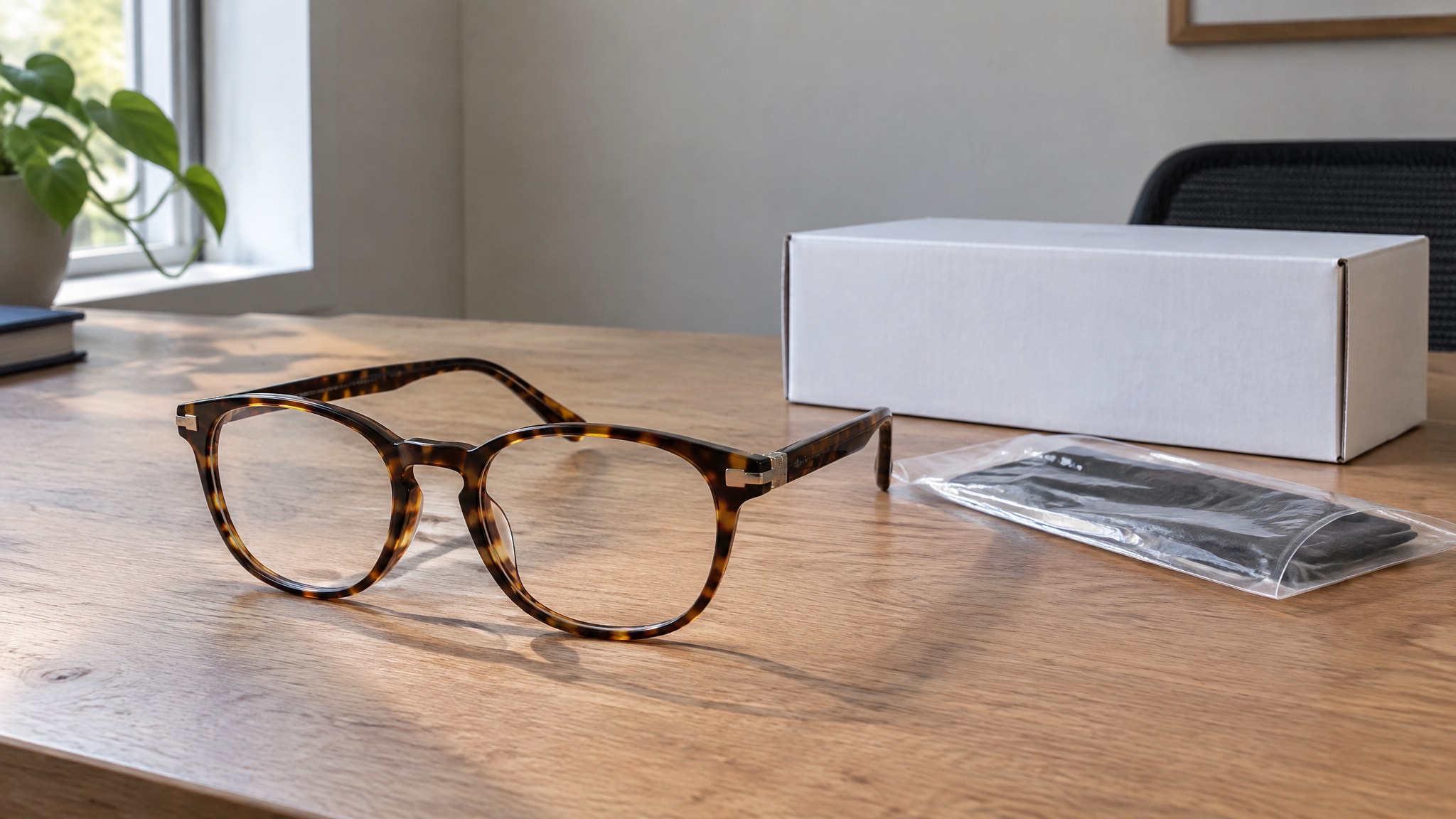
On arrival, check the frame before you do anything else. Look over the finish, the hinges and the nose pads. Open and close the arms. Put it on, in front of a mirror, with no lenses fitted.
If something’s wrong at this stage, you haven’t lost anything, because the frame is still unworn. That’s the point to raise it.
This route doesn’t suit anyone who wants to wear a frame for a week and then decide. A worn frame isn’t new and unworn, and that is the condition returns rely on.
Most online glasses returns turn on three things: the window, the condition and the cost of postage. You’ll find all three in the store’s live returns policy, and you should read it before you pay, not after a problem turns up.
Free Australia-wide shipping is the store’s stated offer, and it describes delivery rather than return postage, so return costs should be read from the store’s current terms. The same goes for the return window and for whether any line of discounted stock is treated differently. Prior-season pricing is a lower price on new goods, but the policy page is where the rules for it are set.
An exchange suits you better than a refund when you like the frame but the size is off, or when you want the same style in a different colour. You stay with a frame you’ve already chosen and you skip a second round of searching.
A refund suits you better when the style itself is wrong. It’s also the cleaner option if the frame is faulty and you’d rather start over elsewhere.
Either way, the measurements do the work. Before you swap, compare the new listing’s three figures with a pair you already wear, so the second frame doesn’t repeat the first one’s problem.
A fit guarantee, in general, covers the frame itself: it lets you send back an unworn frame that doesn’t sit right. The store’s current terms set out the exact wording, including whether the guarantee still applies once lenses are fitted.
Until you’ve read that wording, assume lenses change the picture. Lenses cut to your script are made to order, and a frame that’s had them fitted is no longer unworn. That’s why trying the frame on first is the safest step you can take.
If you buy frames and lenses as a bundle, look at what’s included before you order. Our piece on prescription glasses package deals shows what to check.
Wrong lenses are where accuracy becomes a returns question. Who pays depends on where the mistake was made.
Lenses made to a prescription are often treated as made-to-order, and that can limit change-of-mind refunds. If you simply decide you don’t like the glasses after the lenses are in, the store’s own terms apply, and they may not offer a refund.
If the lenses don’t match the order you placed, that’s generally a fault you can ask to have remade or refunded under the consumer guarantees. The error was made on the seller’s side, so the cost sits with the seller.
Check this by comparing the lenses against your order confirmation. If the figures on the confirmation are right and the lenses differ, raise it with the store straight away and quote the order details.
If the order carried a wrong figure, the lenses are correct for the order and wrong for your eyes. The lab did what it was told. In that case the error is usually the buyer’s, and a remake is likely to be at your cost, subject to the store’s terms.
Two habits prevent this. Keep a copy of your script and your order confirmation until the return or exchange is complete. And read every figure back against the script before you submit. Check sphere, cylinder, axis, add and PD one at a time, not in one glance.
Australian Consumer Law guarantees cover faults and goods that don’t match their description, at any price, and a seller’s policy can’t exclude them. A discounted frame has the same protection as a full-price one. If your glasses arrive with a defect, or the frame isn’t the one that was described, you’re entitled to a remedy whatever the policy says.
Change of mind is different. A return because you’ve gone off the colour, or the frame feels wide, follows the seller’s own terms. The law doesn’t require a refund for that.
The ACCC explains consumer rights and guarantees in plain language. This is general information, not legal advice.
Returns run smoothly when you do them in order. The sequence below applies to most unworn frames, and the live returns policy has the exact process and any timings.
Do this first. Once lenses are fitted, the frame is no longer unworn and your options narrow. So when the parcel arrives, put the frames on, check the fit at your nose and ears, and decide while a return is still simple.
Then:
If you’d like to avoid all of this, the best prevention is to compare a product page’s listed measurements with a pair you already wear. When the figures line up, you can browse the prior-season range knowing what to look for, and the returns policy is there if you need it.
Yes, within the store’s stated terms. An unworn frame in its original packaging is the simplest return. Once prescription lenses are fitted, a change-of-mind refund is often limited because the lenses are made to order, but a fault or a lab error is still covered by consumer law.
Australian Consumer Law guarantees that goods are of acceptable quality and match their description. If glasses are faulty or not as described, you can ask for a remedy such as a repair, replacement or refund, and a store’s policy can’t remove that right. Change-of-mind returns follow the store’s own terms.
Exchange if you like the style and only the size is off. Take a refund if the style is wrong or you’d rather look elsewhere. Either way, check the live returns policy for the window and condition rules before you post anything back.
Look for a returns policy you can read before you pay and frames described as new and unworn. Check that each listing shows frame size, bridge and temple length so you can compare them with a pair you own. A store that shows these details up front makes fit easier to judge.