You don’t need a new eye test every time you need replacement glasses. Not if your vision is stable and your current script is valid. Plenty of Australians hesitate to buy prescription glasses online because they assume every purchase needs a fresh appointment first. It doesn’t.
You can legally use an existing valid prescription to order glasses online in Australia, as long as the document is unexpired and issued by a registered practitioner. That means you can get quality branded frames at lower prices without paying for another consultation on top.
Australian optical standards let you reuse a current prescription to buy corrective lenses remotely. You don’t need to book a new appointment just to replace broken or outdated eyewear. Adult prescriptions in Australia are generally valid for two years, unless your optometrist has specified a shorter review period for health reasons. That’s a decent window to reorder in.
A valid script has to be legible, signed by a registered optometrist or ophthalmologist, and dated within the validity period for your age group. It needs complete sphere, cylinder and axis values for each eye, plus any add power for reading or progressive lenses.
Pupillary distance matters too. It’s what keeps your lenses centred properly. If it’s missing from your prescription, most online retailers can work it out from your existing glasses, or walk you through measuring it yourself. Skip this figure and even a technically accurate prescription can leave the optical centres misaligned with your pupils, causing discomfort.
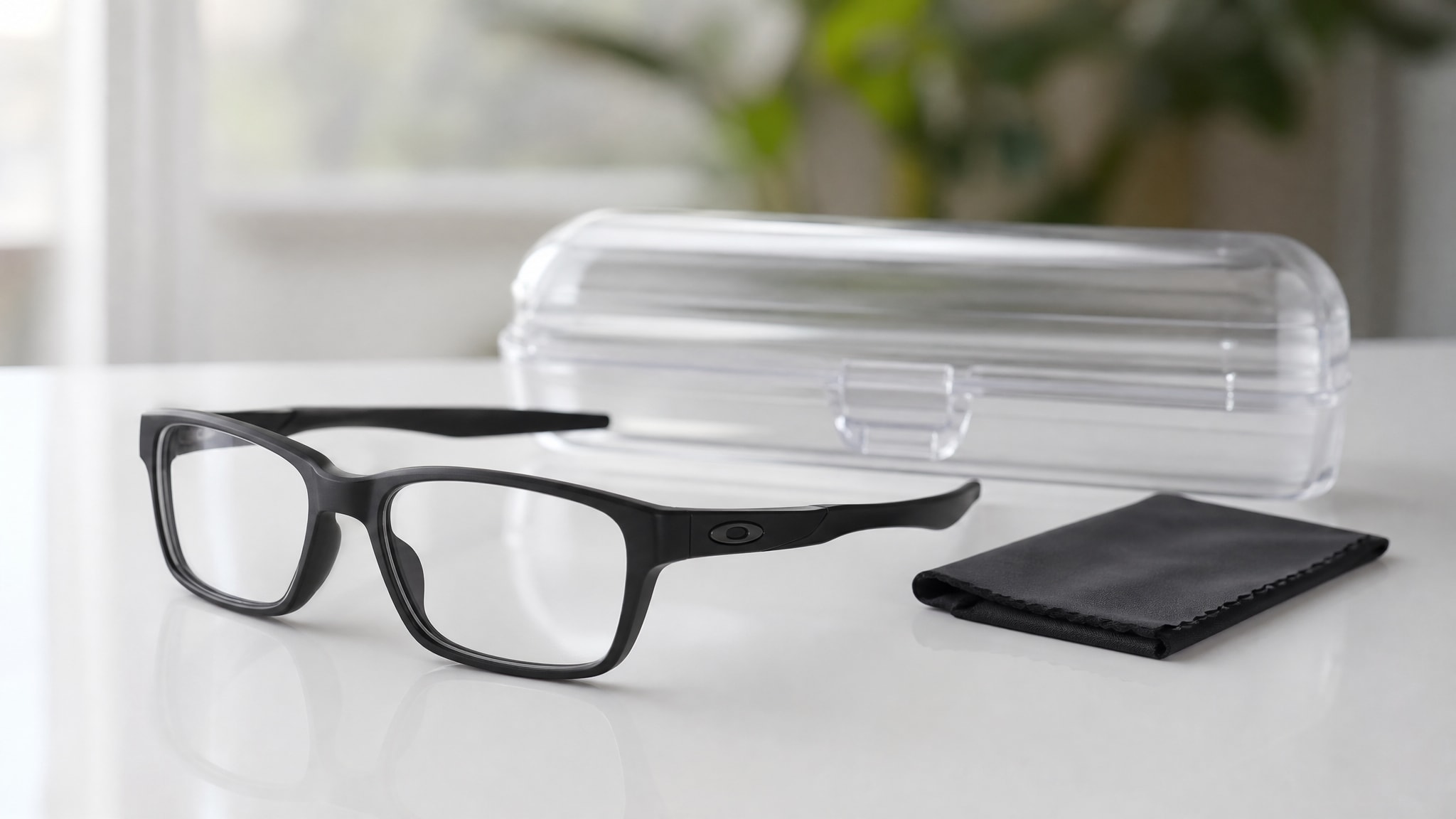
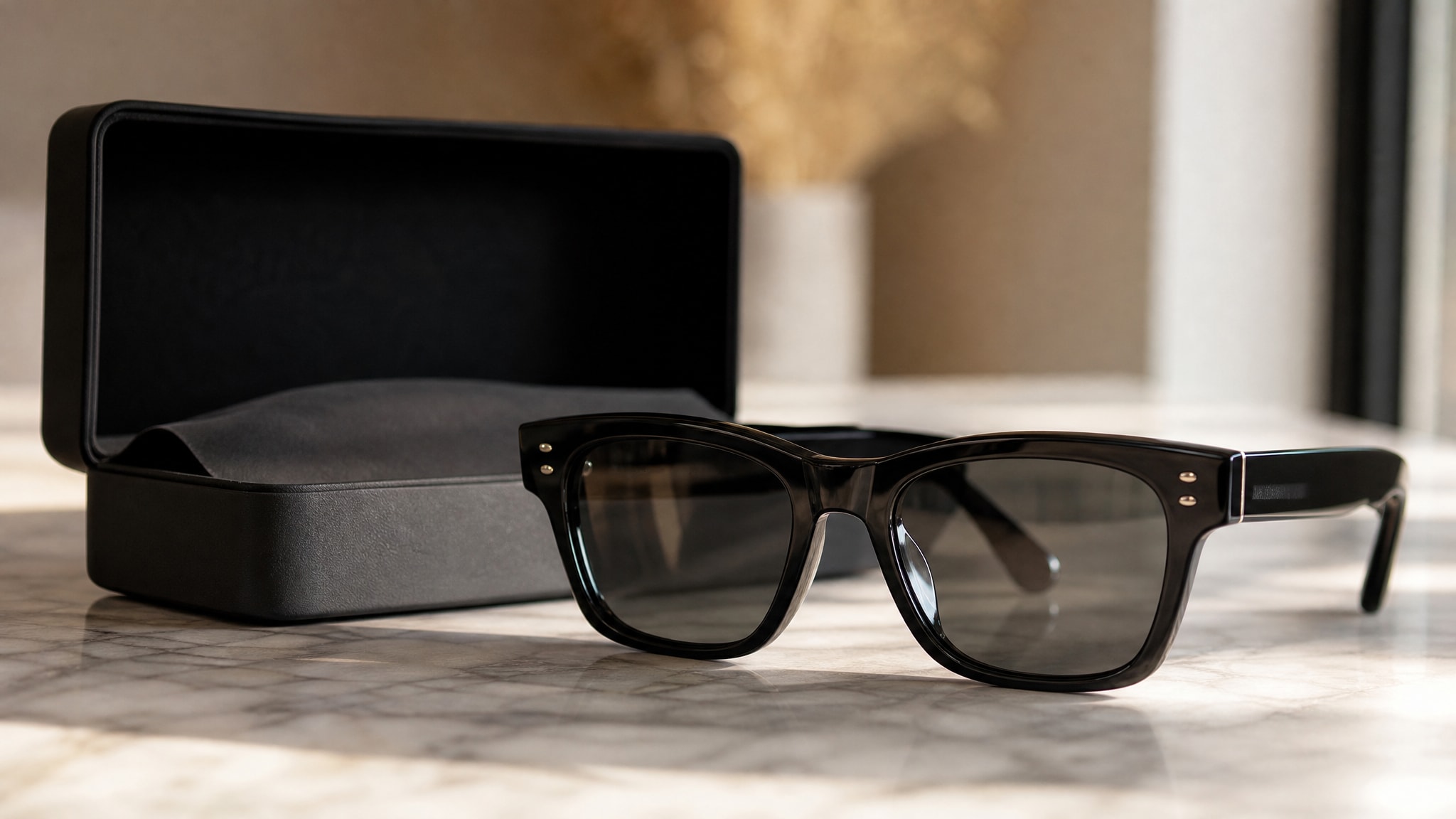
The rules draw a clear line between testing eyesight (a clinical act) and dispensing glasses against an existing valid prescription (a retail one). Say you had an eye test in 2025 and your vision hasn’t changed since: you can buy Ray-Ban or Oakley frames from previous-season stock in 2026 without booking a new test.
That split is what lets you shop around different providers while retailers still run the mandatory checks that keep dispensing safe.
Buying glasses remotely means capturing precise optical data without anyone standing in front of you. Grab your physical prescription and your current glasses before you start. Having both on hand stops transcription errors and gives you real measurements to check frames against.
Pick your frames first. Then enter your prescription details exactly as they appear on the original document, not from memory or an old order. Check that the left and right eye values line up correctly. Transposing them is the most common reason remote lens orders come out wrong.
Reputable platforms will also ask for pupillary distance and segment height if you’re after bifocals or progressives, so all the numbers that matter get captured before you pay. For more on what local retailers actually ask for, our guide on buying prescription frames online in Australia covers the finer points of domestic ordering.
Many Australian retailers let you photograph or scan your prescription at checkout instead of typing every value in by hand. Their systems then check the uploaded document against what you’ve entered, flagging anything that doesn’t match before the lenses go into production. That’s what keeps costly remakes rare.
Verification happens against national standards no matter how you submit your script, and dispensers will call you if a value looks physiologically odd or doesn’t fit your stated age and lens type.
Knowing when your script expires saves you from ordering delays, and from wearing lenses that no longer match your eyes. The standard window is two years for most adults, but your own circumstances can shorten that considerably.
Adults aged 18 to 64 typically get a two-year window from the date of their exam, under Australian clinical guidelines. Children under 18 and adults over 65 often need annual reviews, because their eyes change faster or they’re more likely to develop age-related conditions.
Your optometrist may set a shorter interval right on the prescription if they’re watching for glaucoma, diabetes-related retinal changes, or anything else that needs closer tracking. Go by the review date printed on your script. Don’t assume the general two-year rule applies to you if it says otherwise.
More eye strain at the computer, headaches after reading, trouble focusing at distances that used to be sharp: these all point to your vision shifting, whatever the printed expiry date says. Squinting at road signs at night, or needing brighter light for close work, are worth paying attention to as well.
If your eyes feel different even though the prescription hasn’t technically expired, book a new test rather than ordering against the old one. Wearing the wrong correction for too long speeds up fatigue and isn’t safe, especially for driving or close, careful work.
Buying frames remotely comes down to matching numbers, not trying pairs on. Your current, well-fitting glasses are the benchmark. Measure the lens width, bridge width and temple length printed on the inside arm, then look for those same dimensions in online listings.
A tolerance of two to three millimetres in lens and bridge width usually keeps things comfortable. Go beyond that and you risk pressure points or a frame that slides. Temple length is less forgiving: arms that are too short hook painfully behind the ear, and arms that are too long won’t keep the frame secure when you move.
Check these three measurements against the specs listed for each frame, and note that previous-season stock usually carries the same detailed sizing charts as current retail listings. That comparison is what cuts out guesswork, and it’s why fit-related returns are rare.
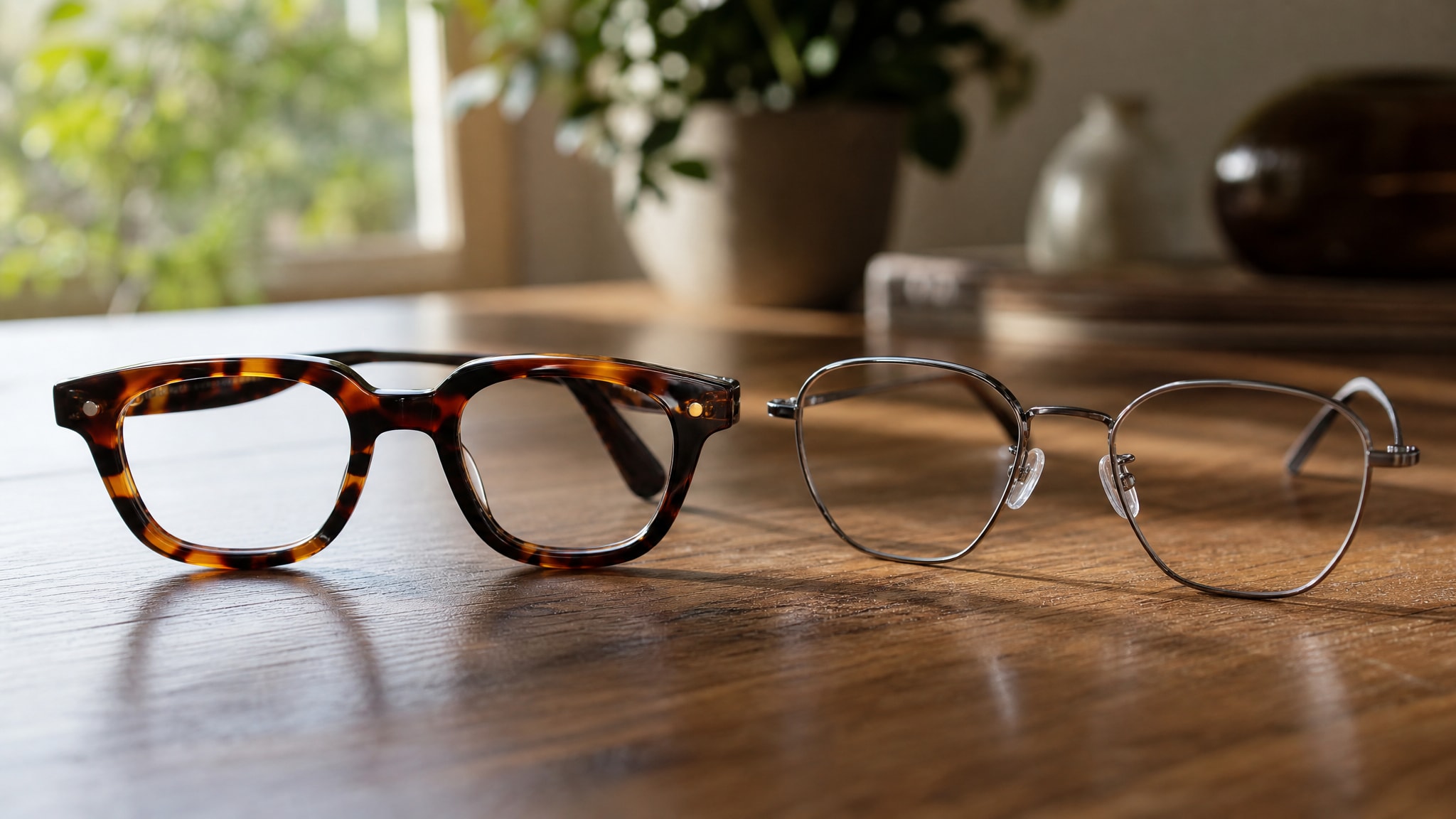
If your prescription is strong, smaller acetate or titanium rims will keep the optics performing well and stay comfortable without needing a professional adjustment; bigger frames add edge thickness and weight fast. Progressive lens wearers need enough vertical depth in the lens to fit the full corridor of vision, which rules out narrow rectangular frames no matter how good they look.
Our guide to suitable frames for progressive lenses picks out prior-season models that meet these requirements at a lower price than current releases. Get the frame geometry wrong for your prescription type and no amount of adjusting after the fact will fix it.
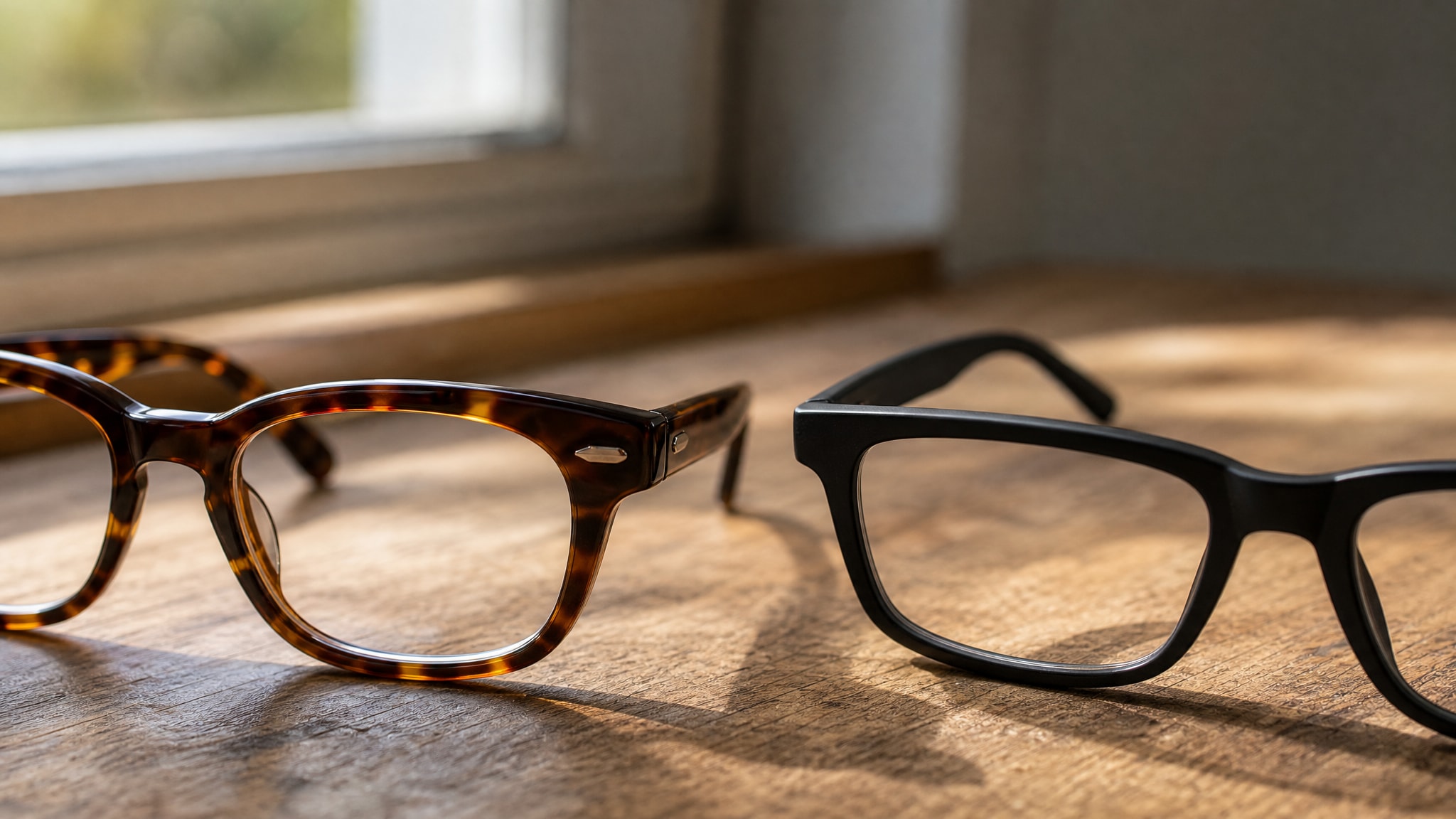
A discount on branded eyewear naturally makes people suspicious, but genuine previous-season stock is built exactly the same as this year’s models, just cheaper. All frames listed on Last Seasons are new and unworn previous-season stock, sourced directly from authorised Australian distributors. Not secondhand, not grey-market.
Genuine prior-season stock and counterfeits differ in the details: hinge quality, how precisely the logo is engraved, consistency across colourways. Our piece on assessing the quality of previous-season frames covers the manufacturer markings and packaging details counterfeiters tend to get wrong.
Prices drop because brands are clearing space for new collections, not because there’s anything wrong with the manufacturing. Our article on verifying genuine branded frames has specific checkpoints for the brands sold through Australian channels.
A lot of hesitation about buying remotely comes down to one question: what happens if it goes wrong after delivery? Legitimate Australian retailers answer that with clear return policies and support for local adjustments, which takes most of the financial risk out of buying sight-unseen.
Most reputable sellers will take back prescription eyewear within a set window if the lenses were made wrong or the frame doesn’t fit despite accurate measurements. Local optometrists can also adjust frames you bought online for a small fee, and most will do it even if they didn’t sell you the glasses in the first place.
Many orders also come with free Australia-wide shipping, which brings the total further below in-store retail pricing even after a minor local adjustment. Put together, the pricing and the aftercare make buying remotely a genuinely practical option.
Modern lens surfacing works the same way whether your frame is from this season or several years back. Previous-season frames meet the same optical benchmarks as current ones, so there’s no functional downside to choosing older stock if your prescription hasn’t changed.
Lens manufacturers calibrate their equipment to refractive standards that have stayed consistent for decades, which is why older frame generations still work fine with new lenses. Your prescription will perform exactly the same in a discounted prior-season frame as it would in a full-price current release, as long as every measurement is supplied and checked properly.