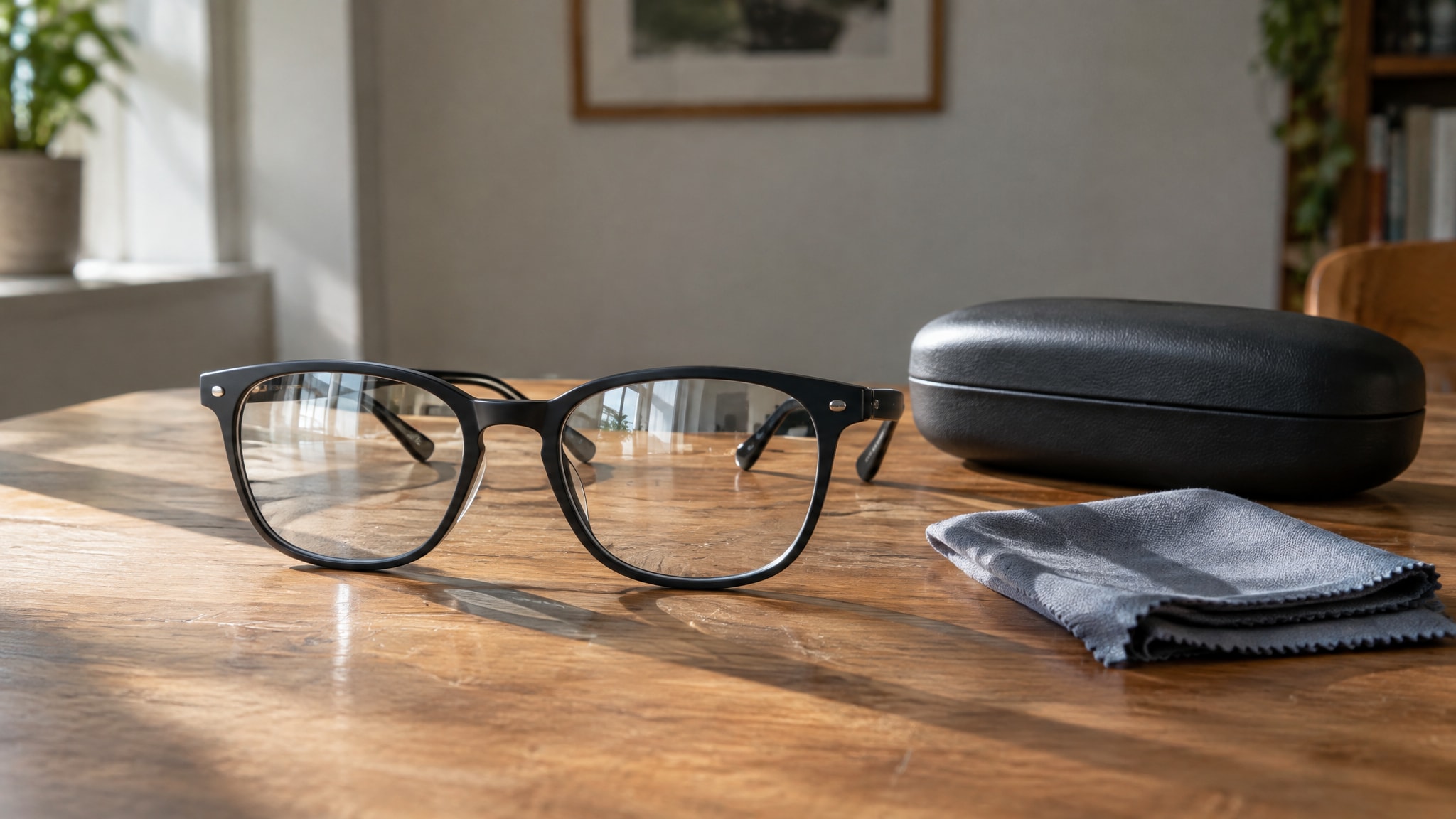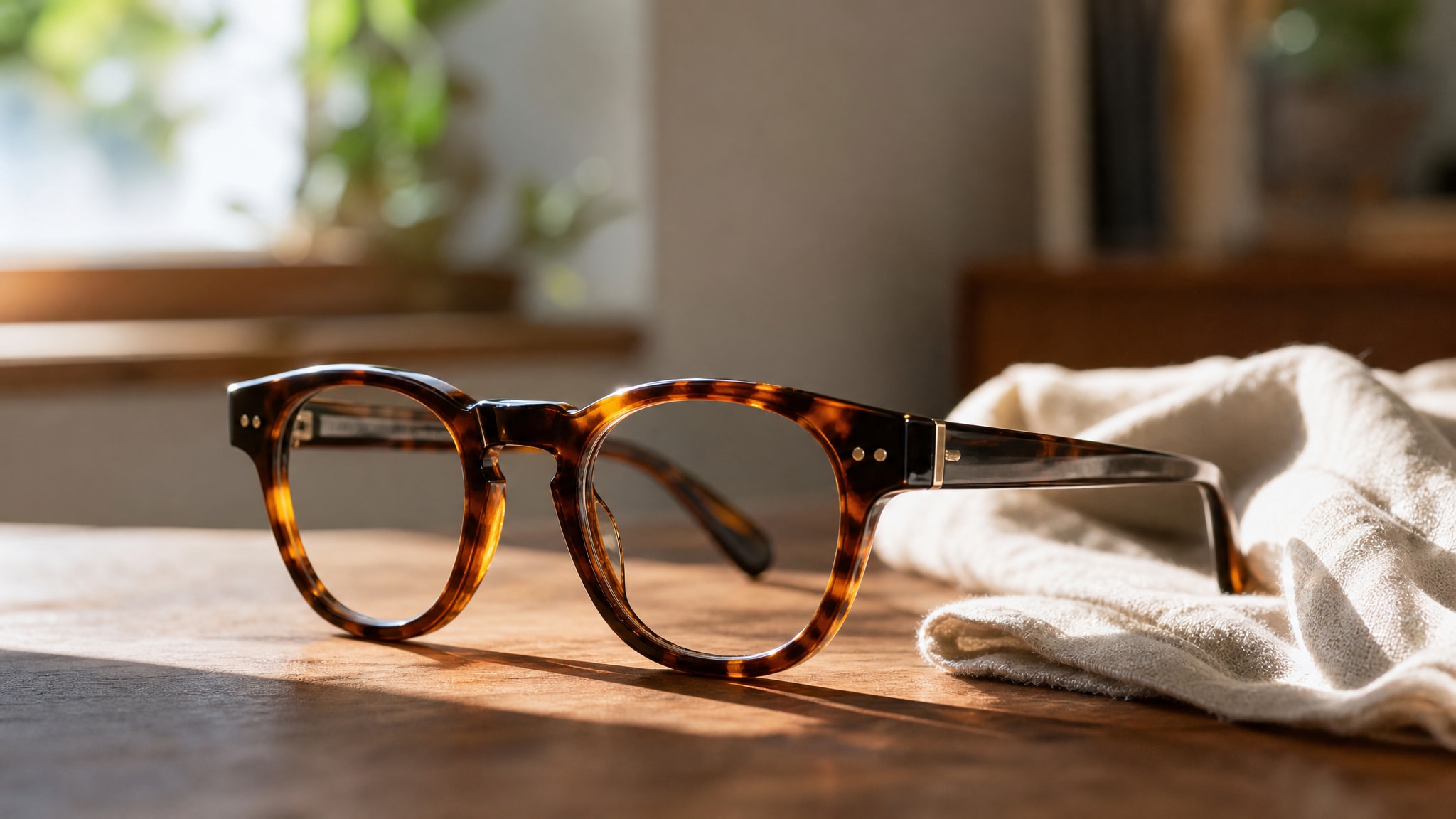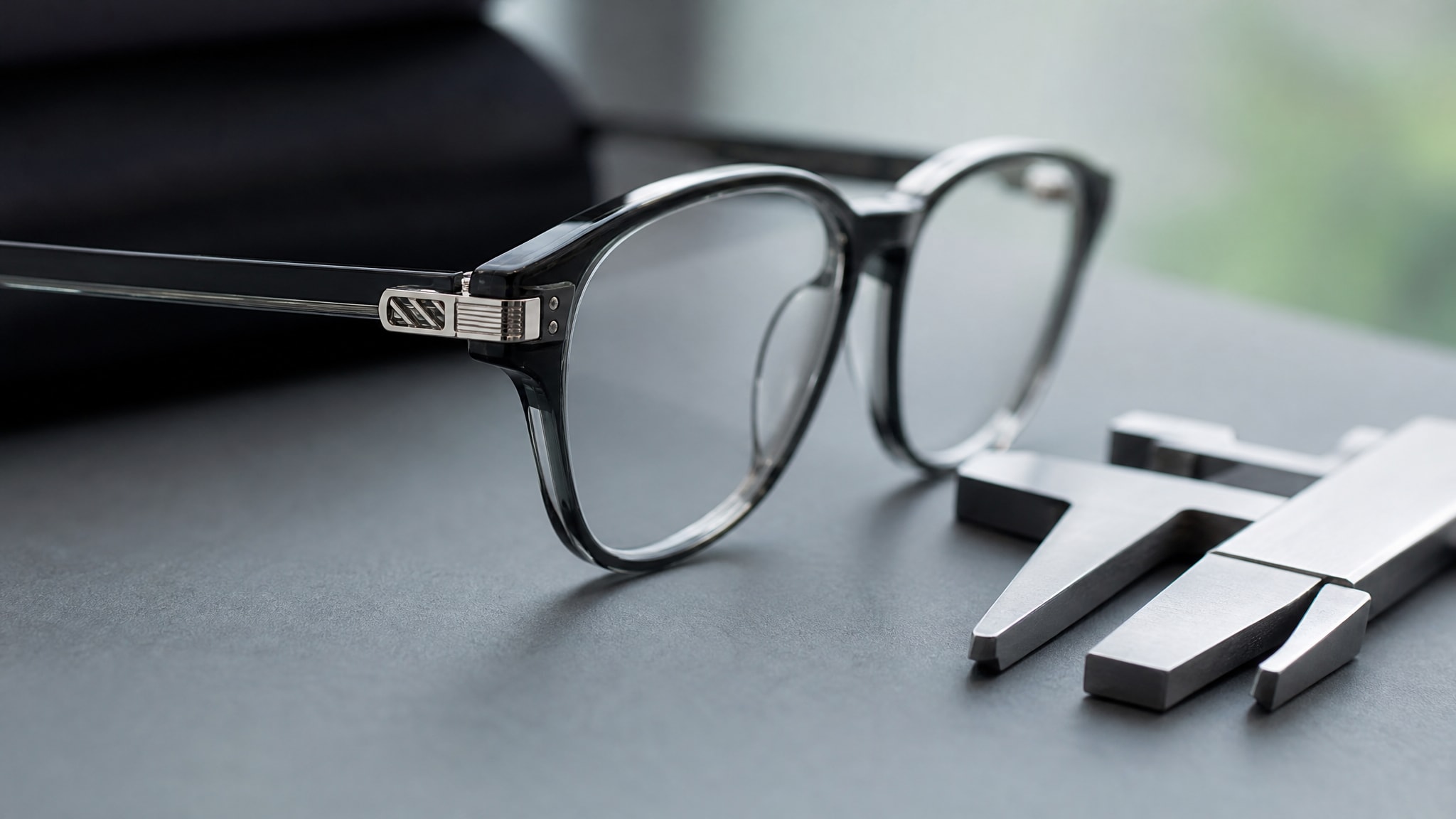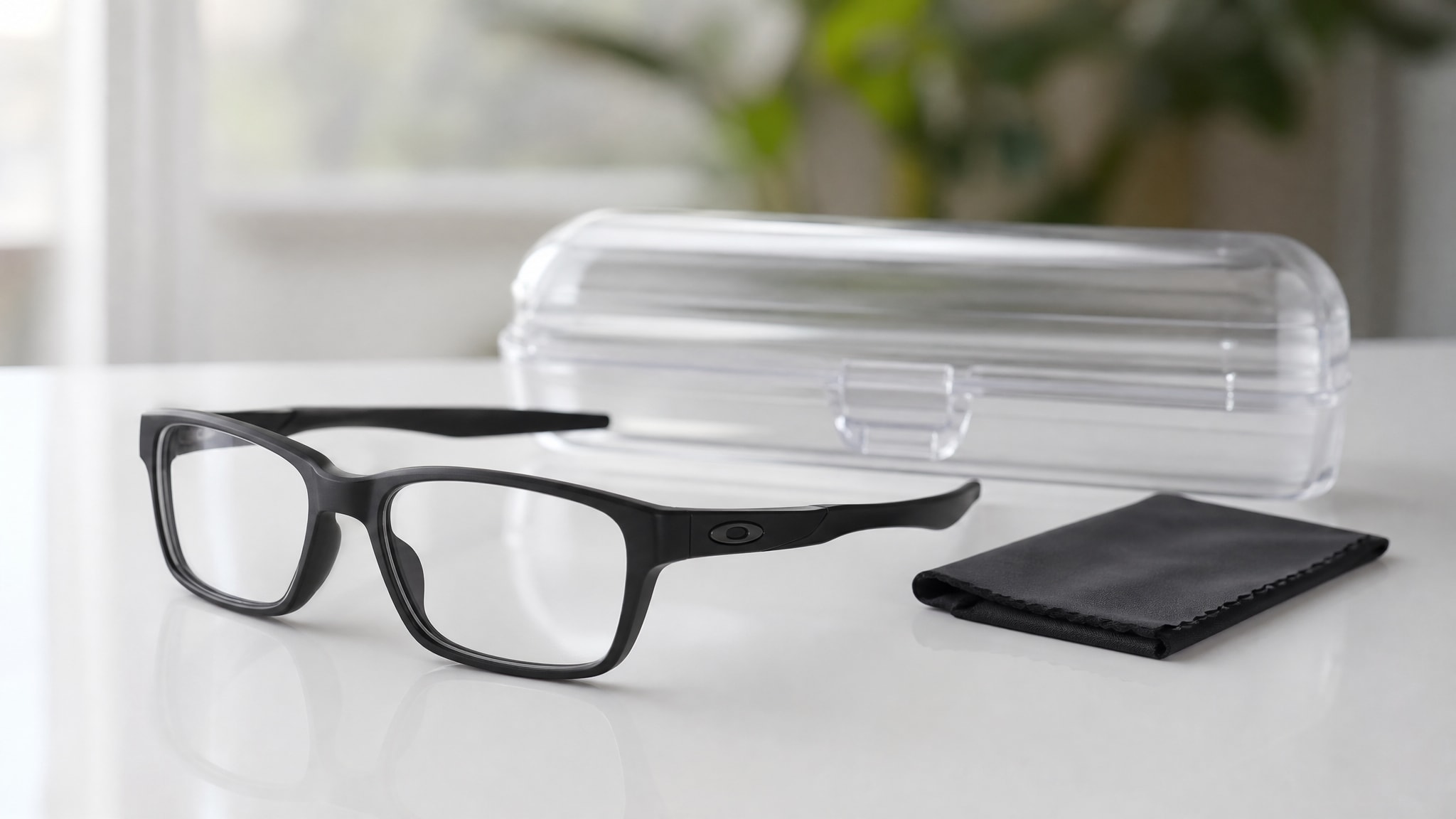
If you’ve ever turned a pair of glasses over and noticed a string of numbers on the inside of the arm something like 52 17–140, you’ve seen eyewear frame measurements. For most people, those numbers are a complete mystery. Once you understand what they mean, however, choosing the right eyewear frames online becomes significantly easier. In fact, you’ll never buy a frame that doesn’t fit your face again.
So, this guide explains every eyewear frame measurement you need to know, how to find your own sizing, and how to use it all when shopping for frames in Australia.
Every pair of glasses has three core measurements printed on the frame, usually on the inside of one temple arm. They are expressed in millimetres and always appear in the same order:
Together, these three numbers tell you how wide the frame sits, how it spans your nose, and how far the arms extend back toward your ears. Getting all three right is what makes the difference between a frame that fits comfortably all day and one that pinches, slides or sits unevenly.
Lens width, sometimes called eye size, measures the horizontal width of a single lens in millimetres. It typically ranges from around 44mm for smaller frames to 58mm or more for larger or oversized styles. Most adult frames fall between 48mm and 54mm.
This measurement does not tell you the total width of the frame that’s the lens width doubled, plus the bridge width. However, lens width is your best starting point because it reflects the overall proportion of the frame on your face.
As a general guide:
Additionally, If you already own a pair of glasses that fit well, you can read the lens width directly from the inside of the arm and use it as your reference size when shopping for eyewear frames online.
The second of the three eyewear frame measurements is bridge width. The bridge width measures the distance between the two lenses across the nose piece. It typically ranges from 14mm to 24mm, with most adult frames sitting between 16mm and 20mm.
Getting the bridge width right is crucial for comfort. A bridge that’s too narrow will pinch your nose and sit too high on your face. A bridge that’s too wide will cause the frame to slide down constantly and create pressure points behind the ears as the arms compensate.
To find your ideal bridge width, measure the distance across the bridge of your nose at the point where you want the frame to rest. A ruler or soft tape measure will do the job. Then compare that figure to the bridge width on frames you’re considering.
If you wear glasses for prescription use, the bridge fit also affects lens centration the alignment of the optical centre of the lens with your pupil. An ill-fitting bridge can move the optical centre off-axis and cause visual distortion, headaches or eye strain even with a perfect prescription.
The third eyewear frame measurement is temple length. The temple length, sometimes called arm length measures from the front hinge to the tip of the arm, including the bend that hooks behind your ear. It is typically between 130mm and 150mm, with 140mm being the most common adult length.
Temple length affects how securely the frame grips your head. Arms that are too short will create pressure on the sides of your head. Arms that are too long will leave the frame loose and prone to slipping. The bend at the end of the arm, called the temple tip, should begin just behind your ear rather than sitting directly on top of it or extending past the earlobe.
Children’s frames typically have shorter temple lengths of 115mm to 130mm. In particular, if you’re buying children’s glasses frames in Australia, checking the temple length is especially important. This is because frames sized for adults will be uncomfortable and sit poorly on a child’s face, regardless of lens width.
Taking the example 52 17–140:
The total frame width would be approximately 52 + 52 + 17 = 121mm. This is the span from the outermost edge of one lens to the outermost edge of the other, which should roughly match the width of your face at the temples.
The easiest method is to check a pair of glasses you already own and know fit well. Find the numbers on the inside of the arm and use them as your baseline.
If you’re starting fresh, a few simple measurements at home will get you there:
You can also ask your optometrist at your next appointment they will have your measurements on file from your last fitting.
When you shop for eyewear frames online in Australia, you can’t try the frame on before you buy. That makes measurement knowledge essential. At Last Seasons, every product listing includes the full measurement specifications so you can compare directly against your existing frames before you commit to a purchase.
Understanding frame measurements also helps you take advantage of the savings available on previous season eyewear. Previous season optical frames carry the same specifications, the same materials and the same quality as current season models, the only thing that’s changed is the collection year. Knowing your measurements means you can shop with complete confidence across our full range.
Now that you know how to read eyewear frame measurements, you’re equipped to shop smarter. So, browse the full range of optical eyewear frames and sunglasses at Last Seasons every product includes complete sizing details, and every order ships free across Australia.