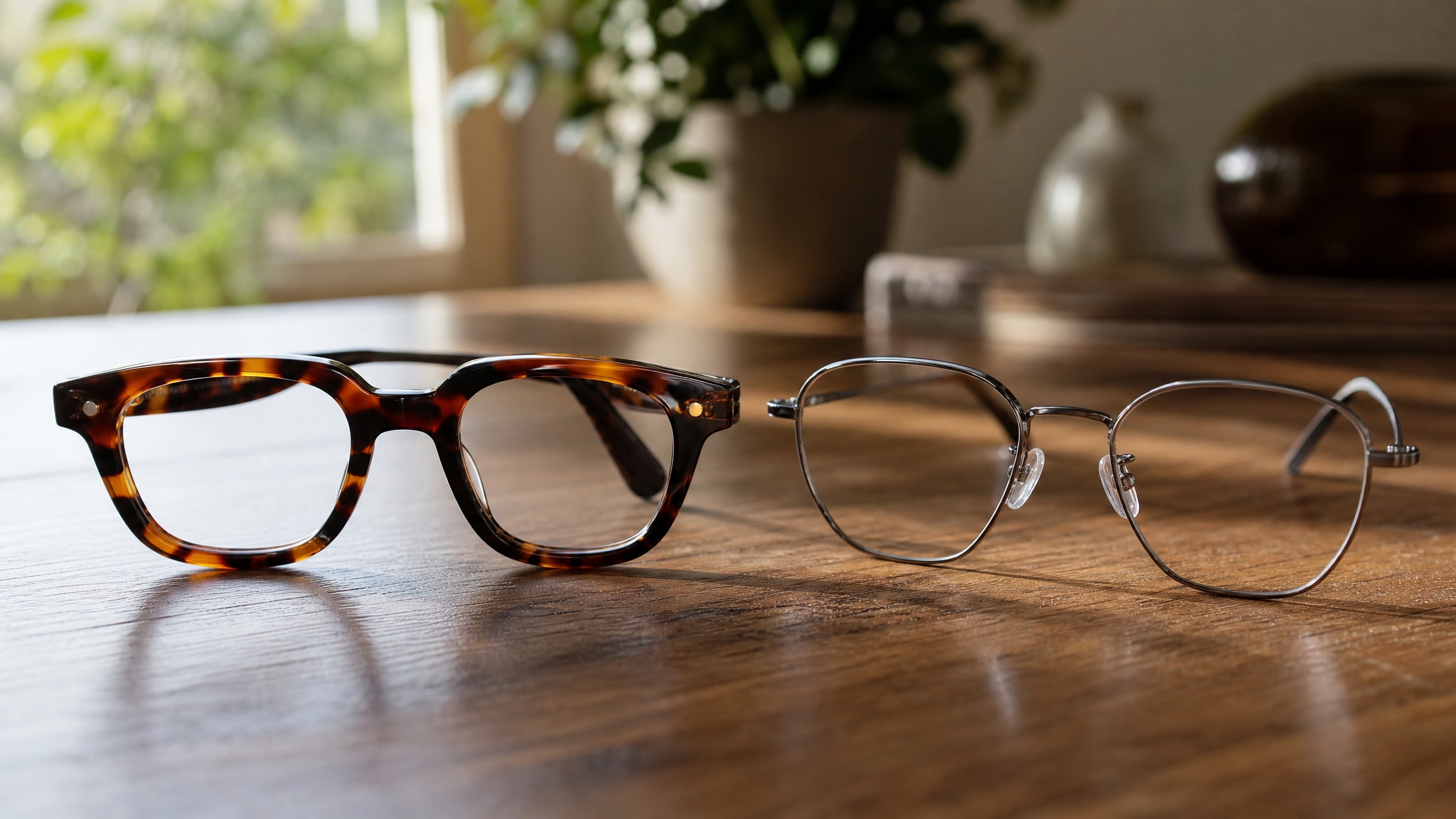
Choosing between acetate and metal frames isn’t about finding a universally superior material. It’s about matching physical properties to your daily routine and prescription. Acetate is a plant-based plastic made from cotton fibre and wood pulp, and it behaves differently to generic injection-moulded plastics. Metal alloys like stainless steel or titanium bring a different set of mechanical advantages for long-term wear. Knowing the difference helps you pick eyewear that holds up without giving up comfort or the look you want.
Acetate frames are cut from solid sheets of renewable cellulose acetate. That process creates a dense material that holds rich colour layers and supports full-rim construction without the fragility you get from cheaper plastics. Metal frames rely on alloy compositions that allow thinner profiles and more give during adjustments. The manufacturing process is different, and so is the wearing experience.
Base your decision on what you actually do day to day, not on the assumption that one material beats the other across the board.
It comes down to this: do you want the bold presence and hypoallergenic properties of plant-based acetate, or the precise adjustability and minimalist profile of metal alloys?
Metal frames are often judged on how well they hold an adjustment. Optical professionals note that metal frames generally keep their fit longer than acetate, so they need fewer trips back to the optometrist for a tweak. That mechanical memory makes metal a strong option if you need frequent fit changes or have facial features that call for precise temple alignment.
Acetate resists snapping under sudden pressure better, thanks to a structure that’s flexible as well as dense. It can turn brittle with age, though, if it’s repeatedly exposed to extreme heat or harsh chemicals.
The materials don’t degrade just sitting in storage, so prior-season branded stock in either category holds the same structural integrity as a current release. That’s the point made in previous season glasses frames quality: quality tracks the materials, not the year the collection launched.
Bridge design and weight distribution decide comfort more than the material itself does, so check how a frame sits on your own face rather than trusting general claims about lightness. Metal frames typically have adjustable nose pads, which let a dispensing optician fine-tune the fit for narrow bridges or sensitive pressure points. Acetate instead relies on fixed bridge sizing and temple curvature for stability.
Heavier prescriptions often do better in acetate. Its wider rim spreads lens weight over a broader contact area, cutting the digging feeling that thin metal wires can cause with high-index lenses.
That same weight-distribution logic matters for lightweight glasses frames for varifocals, where balanced construction stops the frame sliding down your nose as your eyes move between focal zones.
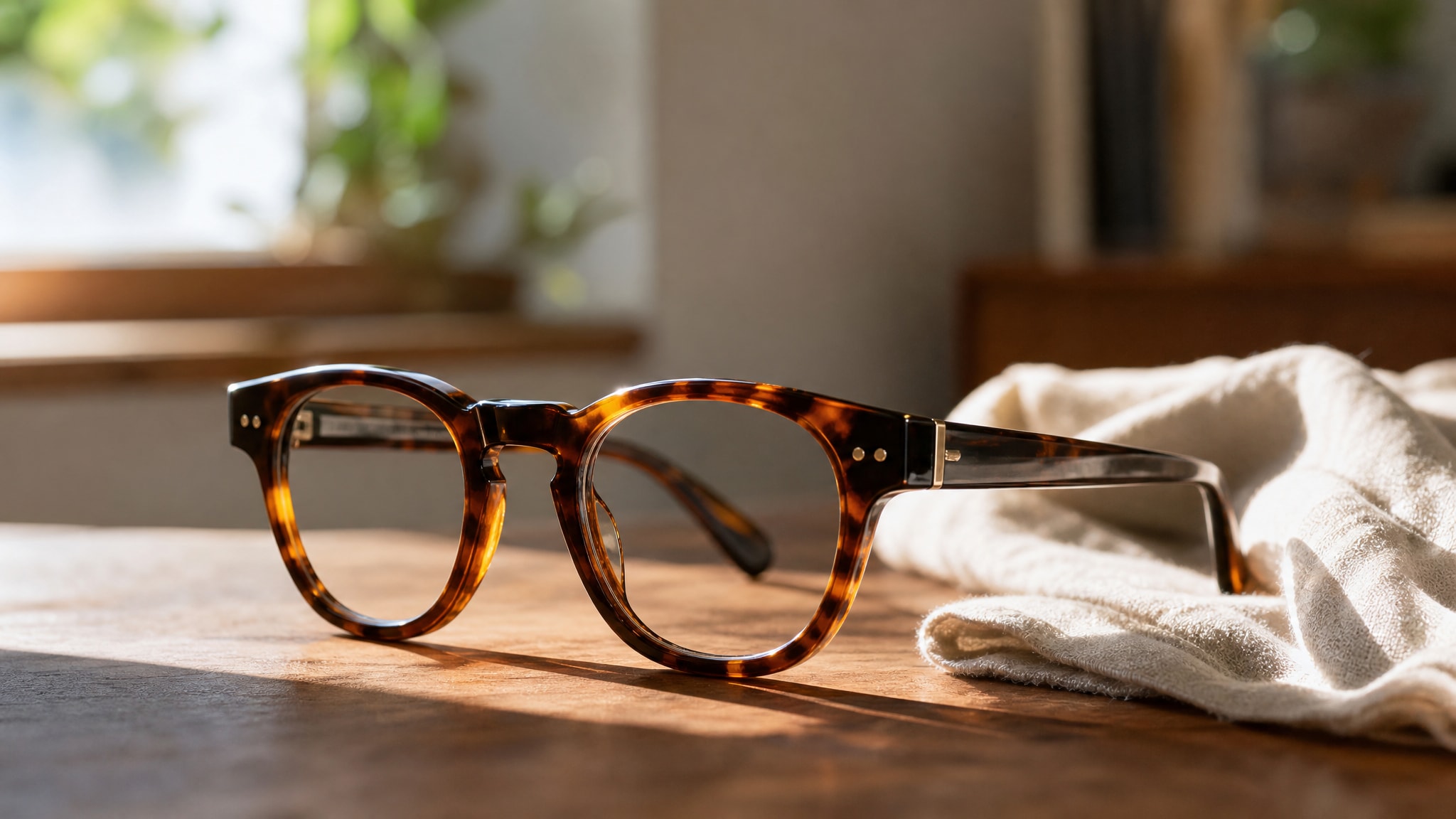
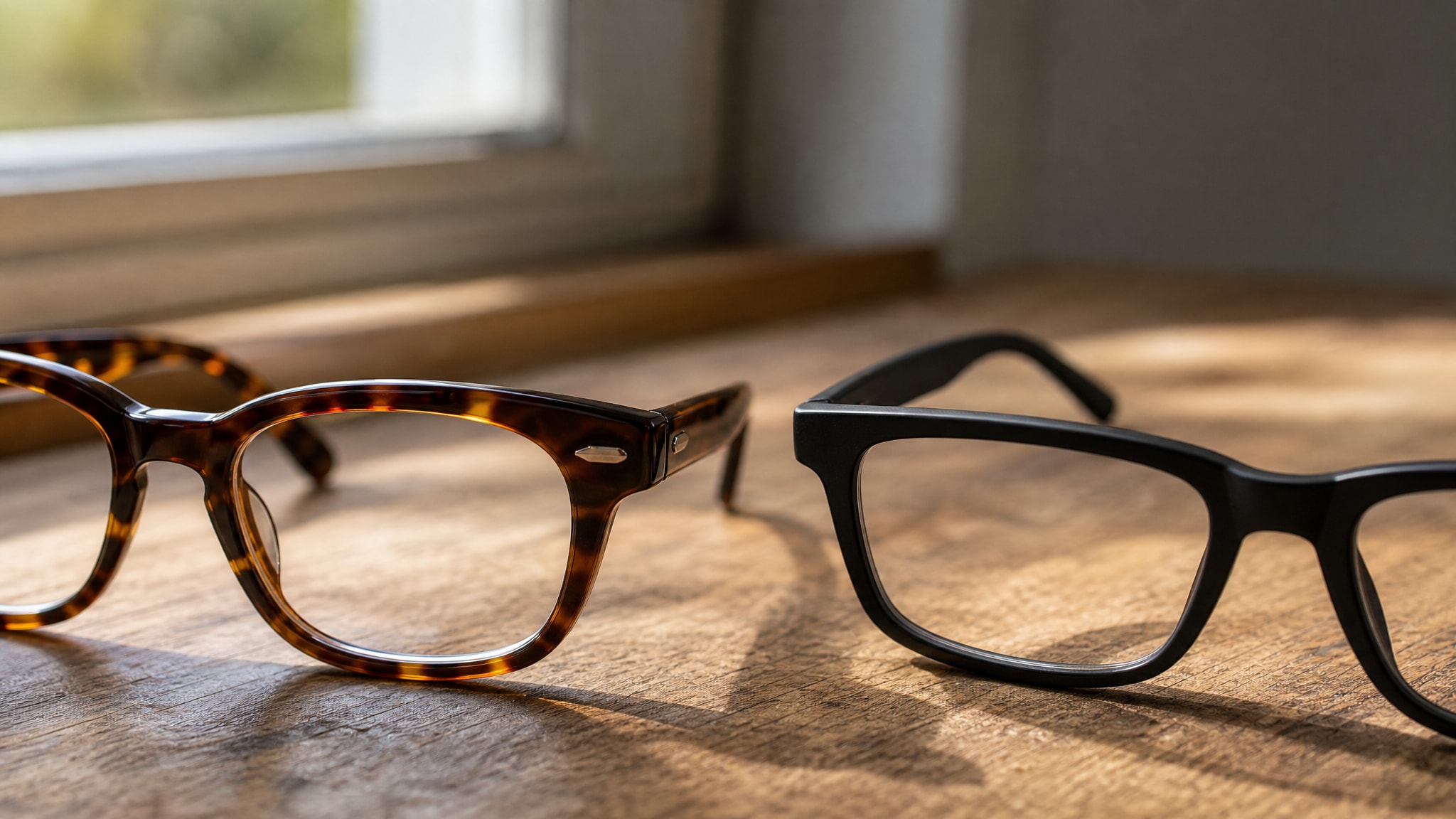
Acetate allows bold colour layering and substantial rim profiles, a deliberate style statement. Metal leans minimalist, with thin lines that recede against the face. The Spencer Wilson Amsterdam frames show what acetate can do with full-rim construction and substantial bridge dimensions for daily stability, available in colourways like dark green or brown-beige that show off the material’s depth.
The Max Mara MM5053 shows the same principle on a women’s frame: enough depth and rim width for comfortable all-day wear, without extra weight.
Metal can’t match that colour complexity, but it offers a subtlety that suits professional settings where understated beats expressive.
Active work environments tend to favour metal, since the frames can be tightened and reshaped to fit under safety equipment or hold up through constant movement without losing their original form. Fashion-forward wearers usually prefer acetate statement pieces, which anchor an outfit through colour and proportion rather than disappearing into the background.
Buying previous-season models gets you the same premium materials at a lower price point, without paying current-retail premiums for construction that hasn’t changed.
Designer glasses frames cost in Australia breaks down why material quality doesn’t track release date, which is exactly why prior-season stock is the pragmatic choice if you care about substance over novelty.
Australian buyers consistently want eyewear that’s durable yet light enough for variable climates and long wear times, and that’s pushing demand toward frames that balance structural integrity with less mass. The Etnia Barcelona Borja frame is a good example: lightweight, but without giving up the build quality you need for daily rotation.
The Spencer Wilson Palm Cove is another. It has a 53mm lens width and 17mm bridge in seagreen acetate, delivering solid coverage while staying comfortable over a long day.
Between them, these frames show that lightweight doesn’t mean ultra-thin metal only. Modern acetate manufacturing gets impressive strength-to-weight ratios through precision milling and deliberate material removal.
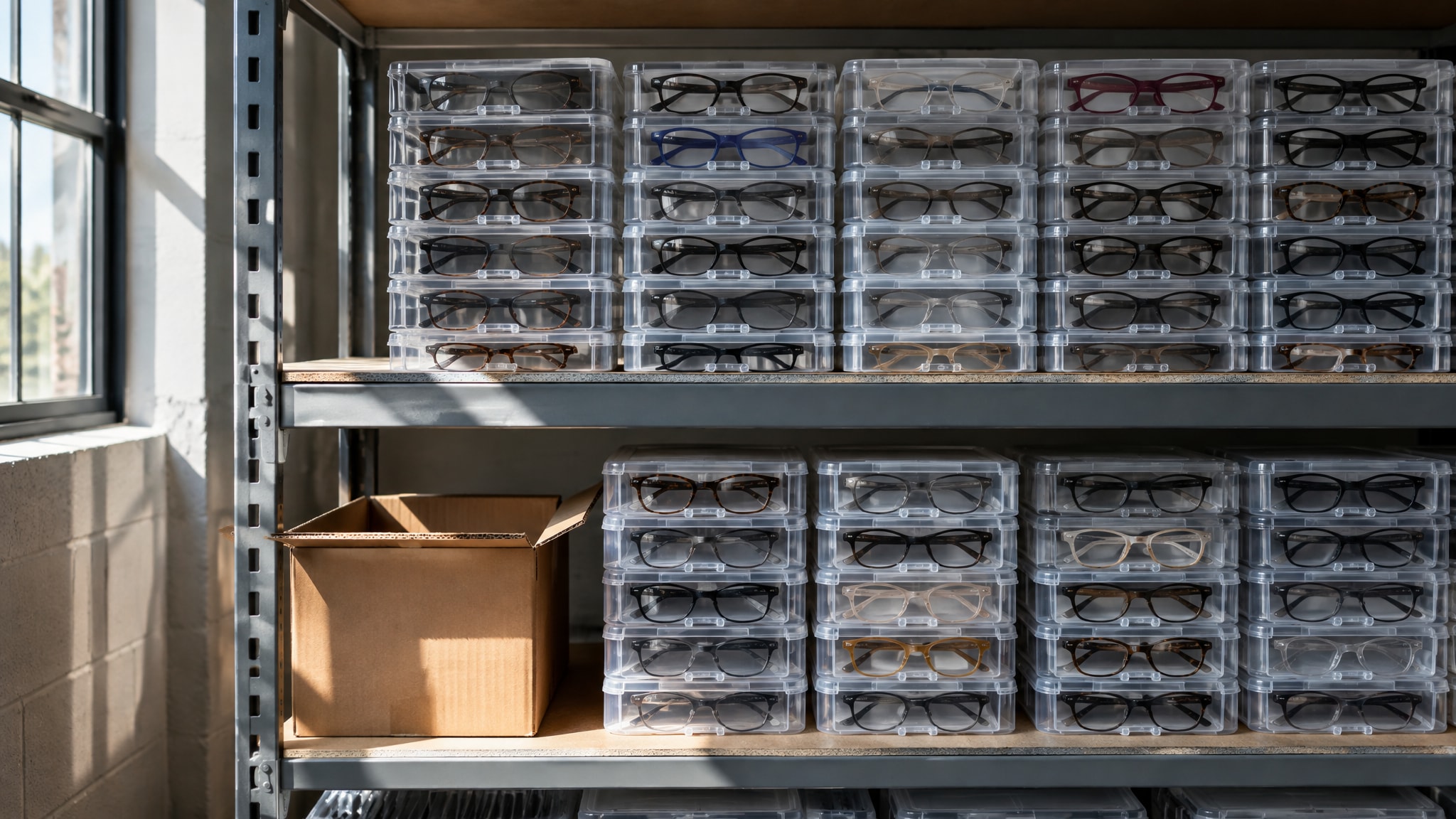
Previous-season frames are new and unworn. You get the same material quality as a current collection, without the retail markup that inflates prices for identical acetate and metal constructions. Last Seasons stocks new, unworn prior-season frames from established brands, so material quality matches current retail standards at reduced prices for both trade partners and everyday buyers.
That marketplace model works for distributors and optometrists moving surplus stock, and just as well for style-conscious buyers chasing recognised brands at accessible prices.
Browse the acetate and metal inventory to compare real value across established manufacturers. Check bridge dimensions, rim depths, and temple lengths against what you actually need, rather than going on category descriptions alone.
Neither material is universally superior; metal excels in adjustability and retains settings longer, while acetate offers better impact resistance and weight distribution for heavier prescriptions. Your optimal choice depends on whether you prioritise precise fit customisation or bold styling with comfortable all-day wear.
Acetate frames lack adjustable nose pads, making fit dependent on fixed bridge sizing that may not suit very narrow or asymmetric nasal bridges. They can also become brittle over time if repeatedly exposed to extreme heat or harsh cleaning chemicals, unlike metal which tolerates such conditions better.
The best material depends entirely on your prescription strength, facial anatomy, and daily activities rather than any inherent superiority. High prescriptions often suit acetate for weight distribution, active lifestyles may favour metal adjustability, and style preferences determine whether bold colour or minimalist profiles serve you better.
Yes, because prior-season frames are new and unworn with identical material integrity to current releases, differing only in release date and price. You receive the same manufacturing standards and brand quality assurance while avoiding the retail premium attached to newly launched collections.