Spotting a bargain on branded eyewear usually triggers suspicion, not excitement. You see the logo you want at half the expected price, and your first thought is: what’s been compromised to get there? That’s a reasonable question. Online marketplaces are the main channel for non-compliant frames, and counterfeit eyewear seizures in Australia have climbed sharply in recent years. But that same wariness also causes plenty of buyers to walk away from legitimate deals.
The difference between a fake and a genuine discount usually sits in the supply chain, not the product. Knowing how to check if glasses frames are genuine means going past the generic warnings and understanding the actual manufacturing and distribution standards that separate authorised surplus from counterfeit stock.
A low price doesn’t automatically mean a scam. It also doesn’t mean the seller has verified their stock through official channels, plenty haven’t.
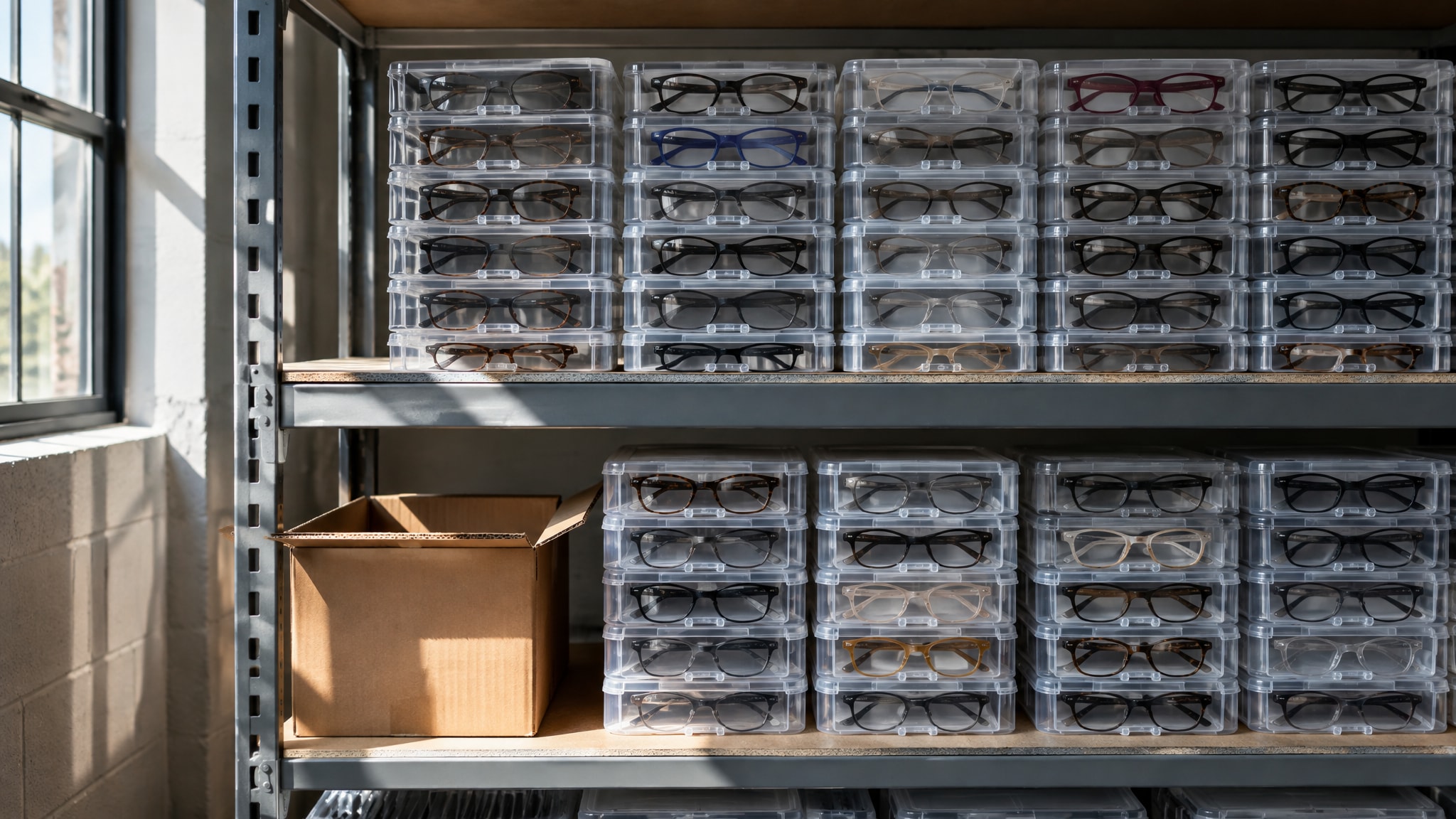
Legitimate discounts usually come from inventory cycles, not manufacturing defects or backdoor production runs. Optical practices and distributors regularly clear prior-season models to make room for new collections. That creates a secondary market for unworn, authentic frames built to the same standard as full-price retail stock.
Suspiciously low prices behave differently to legitimate clearance pricing, both in size and in pattern. A frame discounted 30–50% reflects a standard margin adjustment for aged stock. A price 80% below RRP almost always points to unauthorised sourcing or counterfeit manufacture.
There’s a physical tell too. Genuine luxury eyewear hinges run on hydraulic resistance with precise alignment. Counterfeits often feel loose, gritty, or oddly stiff, because the metal alloys and assembly behind them are inferior.
Most high-end frames can be checked by hand, with nothing more than good lighting and a bit of attention. These checks target manufacturing tolerances that counterfeit operations rarely bother matching, because getting them right would erase the cost advantage of making fakes at all.
Authentic Ray-Ban and Oakley frames carry a laser-etched serial number on the inner left temple that matches the box label exactly. Fakes often have painted numbers, or numbers that don’t match the box at all. The etching itself should be clean and even in depth, sitting in the same spot on both temples, with no bleeding into the surrounding material and no sign it’s been touched up by hand.
Logo placement follows strict brand guidelines that shift by model and production year. Counterfeiters often work from outdated templates, or glue logos on rather than moulding them in, which is why fake logos sometimes sit slightly raised, and peel or shift under pressure.
Every genuine designer frame carries a unique identifier: model code, colour code and size, in a standard format. Cross-check that string against the manufacturer’s official database or an authorised retailer’s listing to confirm it matches the exact frame you’re holding.
On authentic frames, that serial number is built into the material, not printed on top of it. Rubbing alcohol or acetone won’t touch legitimate etching. It will often dissolve the painted or printed numbers used on counterfeit stock.
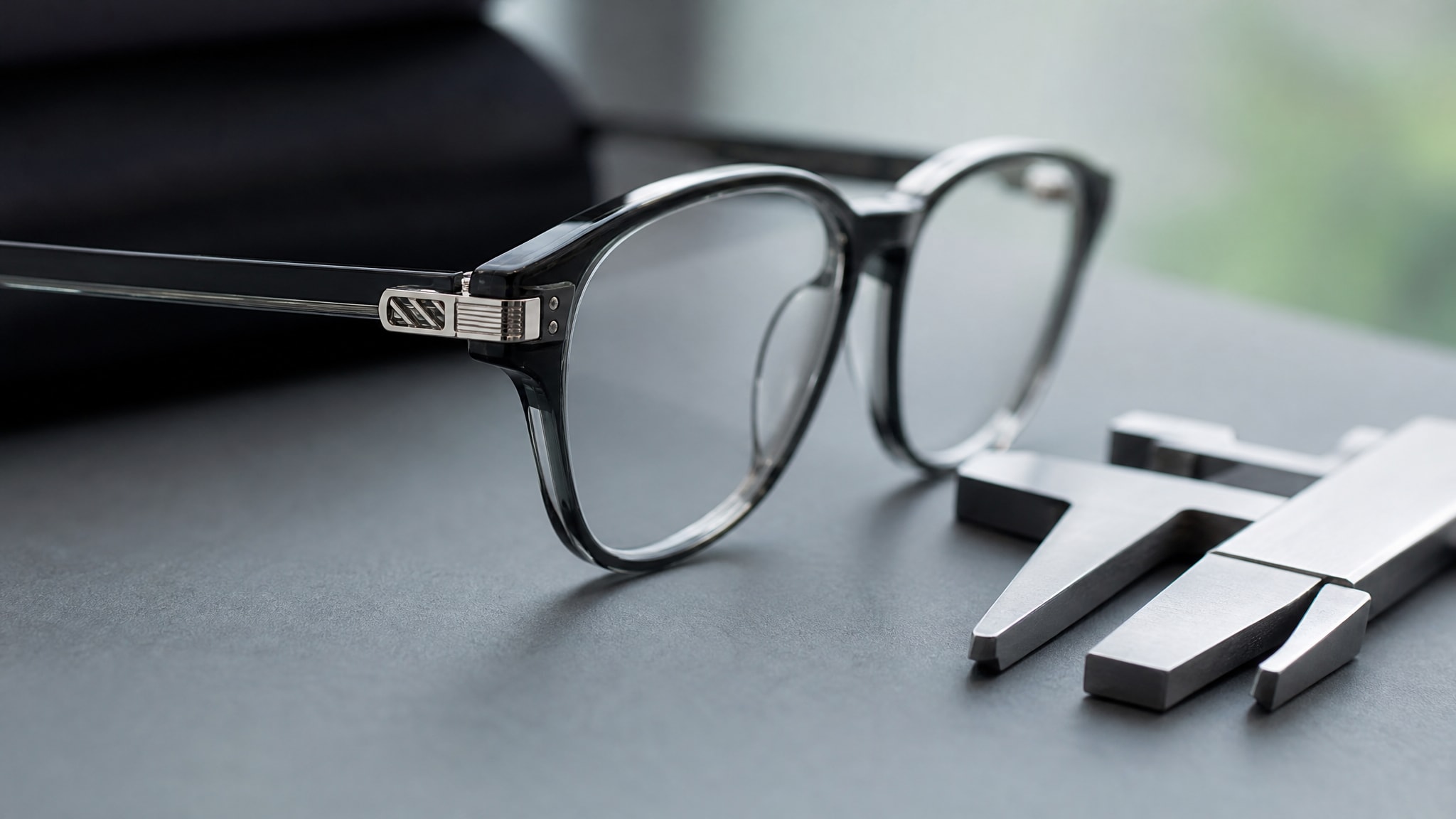
Premium hinges use multiple barrels and screws machined to tolerances measured in hundredths of a millimetre. Open and close the temple arms, the motion should stay smooth across the full range, with no catching, no wobble, and no extra force needed to get it moving.
Weight tells you more than a glance does. Genuine acetate frames feel dense and balanced across the bridge and temples. Counterfeits often use hollow construction or lighter plastic, which makes the frame feel top-heavy or flimsy in the hand.
Weight alone doesn’t prove anything. But a big gap from a model’s published spec is worth chasing further.
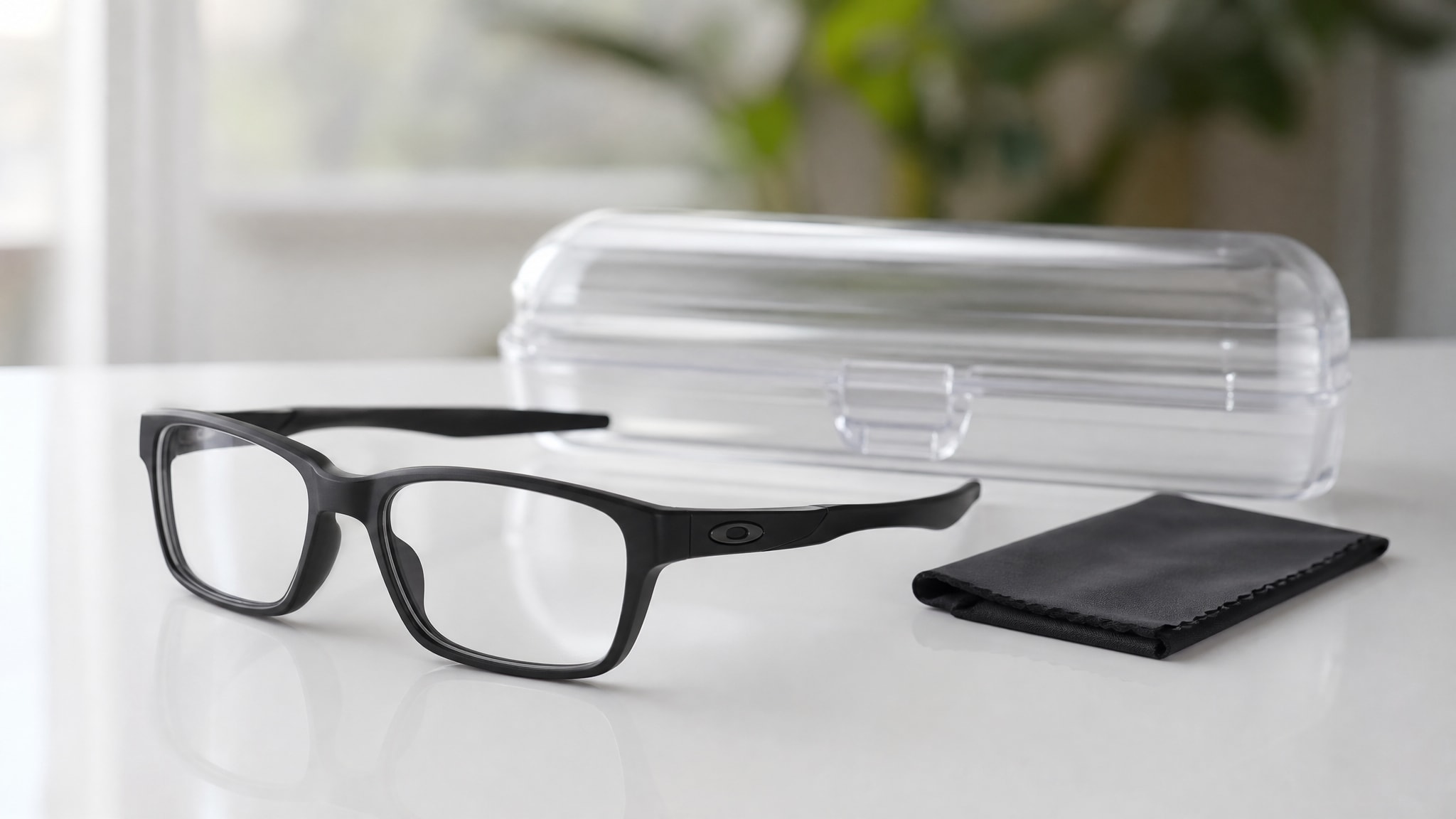
Packaging is your first line of defence when buying branded glasses online, because legitimate distributors hold to branding standards that grey-market sellers can’t afford to replicate. Counterfeit operations tend to cut corners on cases, cloths and paperwork first, since none of that shows up in a listing photo of the frame.
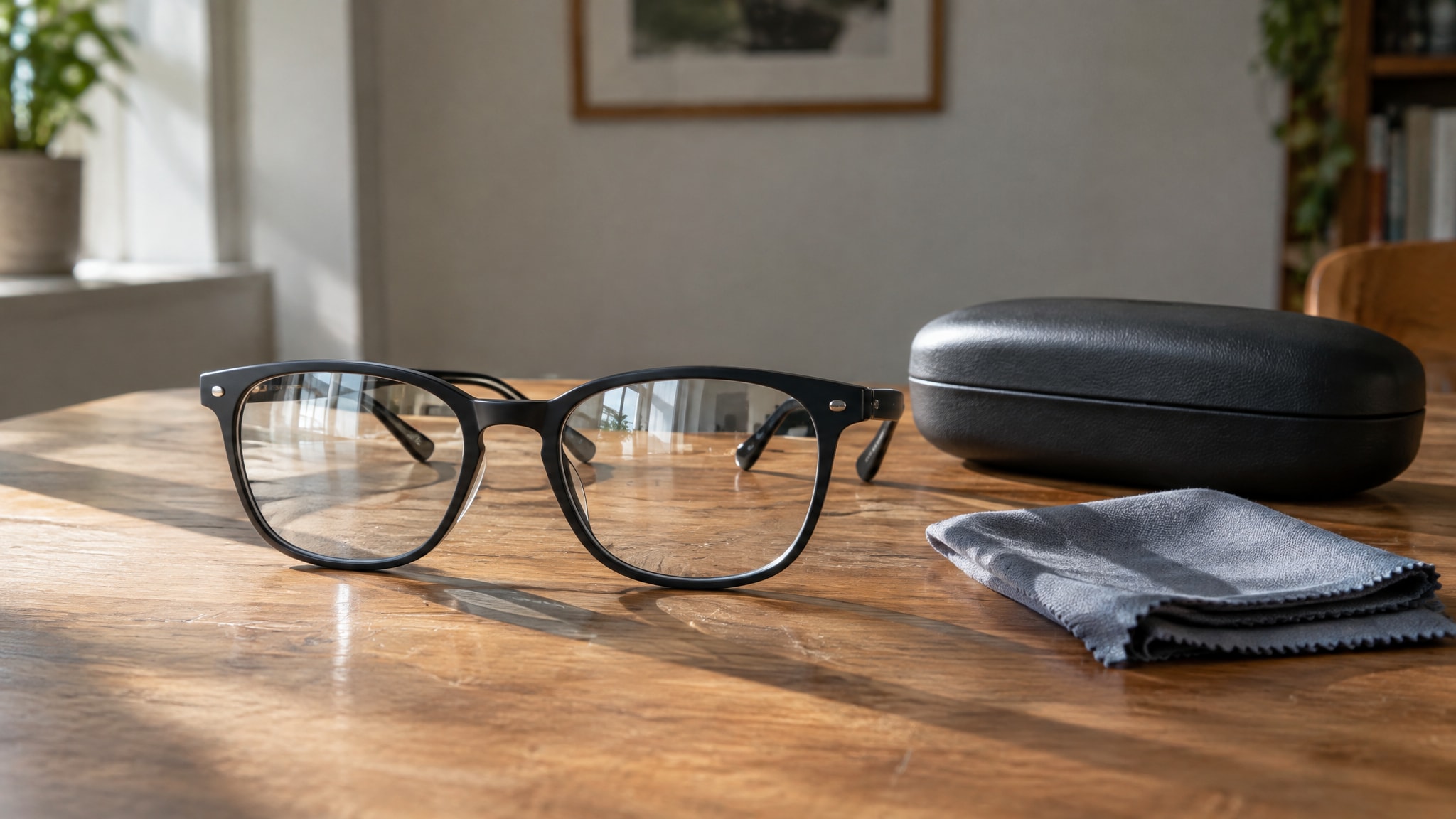
Official brand cases have precise stitching, aligned logos and interior lining that matches the manufacturer’s own packaging spec. Zippers should carry the brand name or an approved supplier mark, and the case interior should have model-specific moulding or padding, not generic foam.
Microfibre cloths that ship with genuine frames show accurate colour and logo placement matching current brand assets. Faded printing, wrong fonts or frayed edges on the cloth are a sign the whole package may have come from an unauthorised source.
Valid warranty documentation has specific fields filled in by the authorised dispensing optician or distributor at the point of sale. A blank warranty card, or one missing a retailer stamp, date and contact details, offers no protection, and it’s a sign the frame skipped official distribution.
A genuine certificate of authenticity references batch numbers or serial ranges that trace back to the manufacturer’s own production records. A generic certificate that could apply to any brand, with no unique identifier, is worth nothing in an authentication dispute.
Authorised distributor clearance runs through a documented supply chain, where ownership can be traced from manufacturer to final retailer. That’s what lets a specialist platform guarantee provenance even at a steep discount. Marketplace listings from unverified sellers usually have no auditable link back to the brand owner at all.
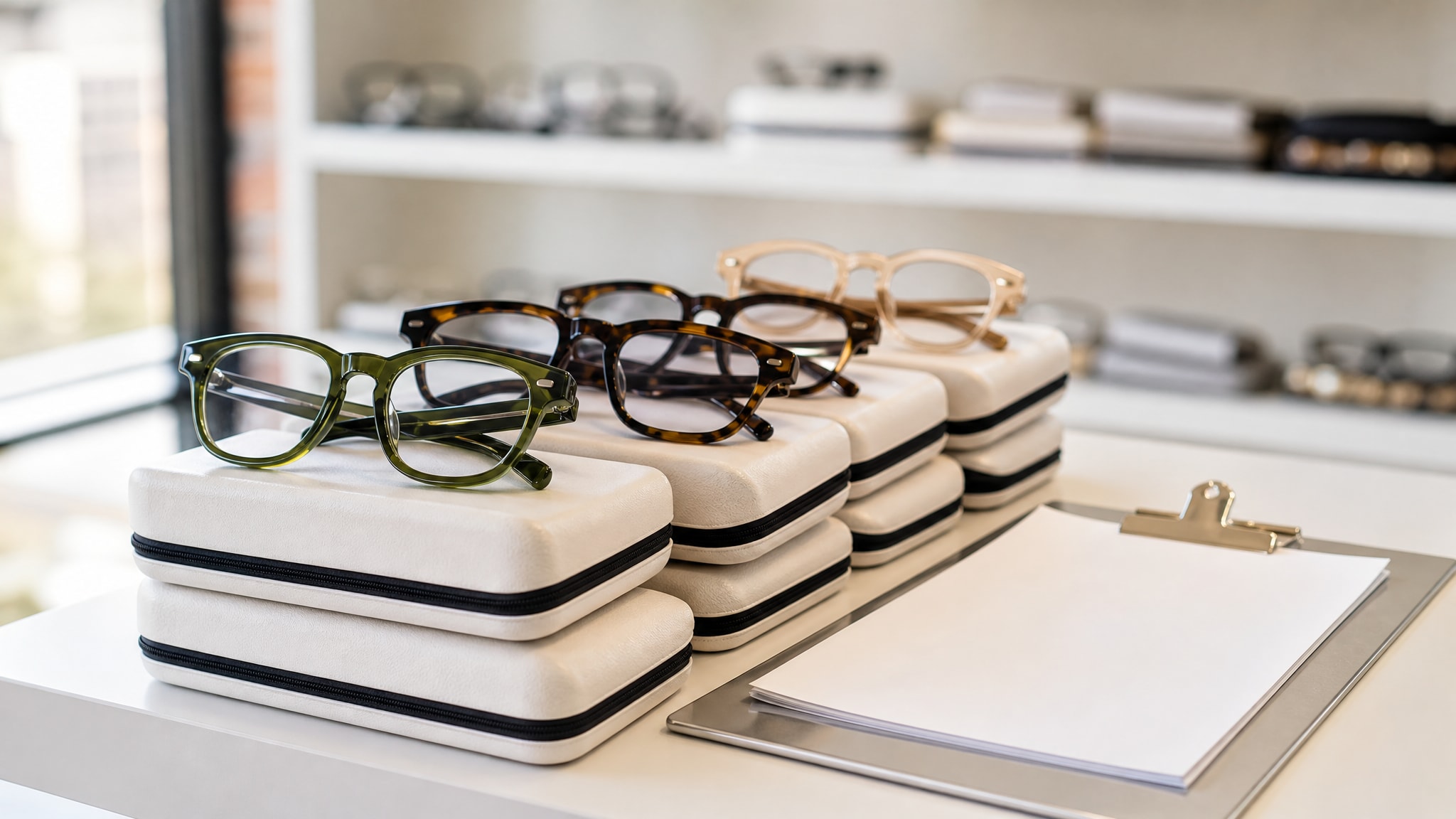
Prior-season surplus is new, unworn stock that optical practices have pulled from display to make way for updated collections. These frames carry the full manufacturer warranty and meet the same quality control as current-season stock. The only real difference is the release date, and how that date affects retail positioning.
Previous season frames quality is worth understanding on its own terms, it’s what separates ordinary inventory management from a discount that should make you suspicious. Brands build in overproduction expecting clearance sales. Discounted genuine stock is the planned outcome of that, not an anomaly that needs explaining.
Counterfeit stock, by contrast, moves through channels built to obscure origin. Sellers can’t produce an invoice from a licensed distributor, won’t share business registration details, or give vague sourcing explanations that don’t line up with how the brand actually distributes.
General marketplaces list thousands of eyewear items a day. Telling a legitimate seller from a bad one takes more than checking the platform rating, a high-volume seller with a perfect feedback score can still be moving counterfeit stock if their own wholesaler mixes genuine and fake inventory.
Wholesale costs for premium eyewear set a floor that legitimate retailers can’t sell below without taking a loss. Any listing priced under 40% of current RRP for a current-season model should trigger a verification request before you buy.
Bundle deals offering several designer frames at a per-unit price well under wholesale usually mean counterfeit stock. Genuine distributors don’t liquidate authentic inventory at rates that undercut their own authorised retail partners.
Legitimate sellers give you full business details: a physical address, an ABN or NZBN, and a phone line staffed during business hours. A P.O. box, email-only contact, or a refusal to share registration details all correlate strongly with sellers avoiding accountability for what they’re actually selling.
A genuine return policy gives you enough time to get the eyewear checked by an independent optician. If a seller caps returns at seven days or less, charges a restocking fee over 20%, or won’t refund an authenticity dispute, that’s a barrier built to stop you verifying the product.
For broader guidance on the local market, see buying designer sunglasses online before you commit to an unfamiliar seller.
Last Seasons sources exclusively from licensed Australian optometrists and authorised distributors clearing prior-season stock, so every frame is new, unworn and verifiably genuine. Buying direct like this cuts out the intermediary handlers who could introduce unverified stock, and it gives us provenance documentation that a marketplace seller simply can’t match.
Every frame is physically inspected against manufacturer spec before it’s listed, serial numbers, hinge mechanics, packaging, all checked against brand standards. A frame that fails any checkpoint gets rejected, regardless of how credible the source looked on paper.
Our range focuses on discontinued optical frames that optical practices have cleared to refresh their displays. That narrow focus means deeper expertise on specific models and colourways than a generalist reseller juggling a dozen product categories can offer.
You get the original packaging, valid warranty documentation, and a clear line back to the supplying practice or distributor. That’s enough for independent verification through a brand service centre or your own optician, no anonymous marketplace trust gap to worry about.
We don’t source from private sellers, estate liquidations, or international grey-market channels where provenance can’t be confirmed against Australian distribution records.
Verifying discounted eyewear means checking more than one thing, no single indicator tells the whole story. Run any listing through this before you buy:
When you’re ready to put these checks to use, you can buy prescription frames online through channels that put transparent sourcing ahead of an ambiguous deal.