Buying glasses online means you can’t physically test frames. It doesn’t mean you can’t get a perfect fit. Most shoppers hesitate because they’re relying on guesswork instead of measurable data. Treat frame selection as a spec exercise, not a purely aesthetic choice, and you can choose frames online with confidence.
Last Seasons Eyewear specialises in new, unworn previous-season optical frames and sunglasses from established brands, sold at reduced prices with free Australia-wide shipping. That model gives you premium build quality at accessible prices, provided you have the right tools to verify fit remotely. This guide swaps subjective guessing for concrete measurements and material knowledge, so your next pair fits as well as it looks.
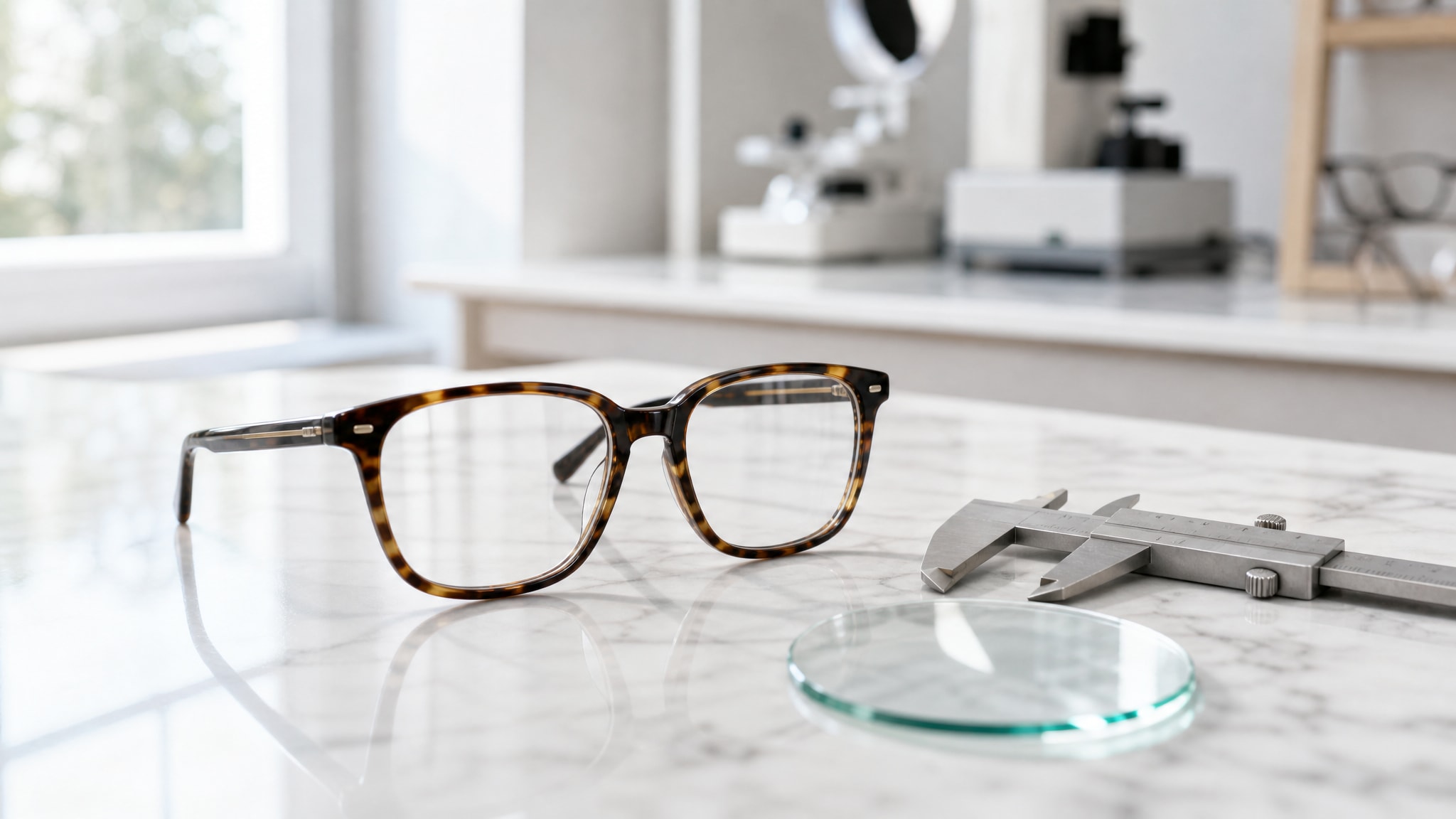
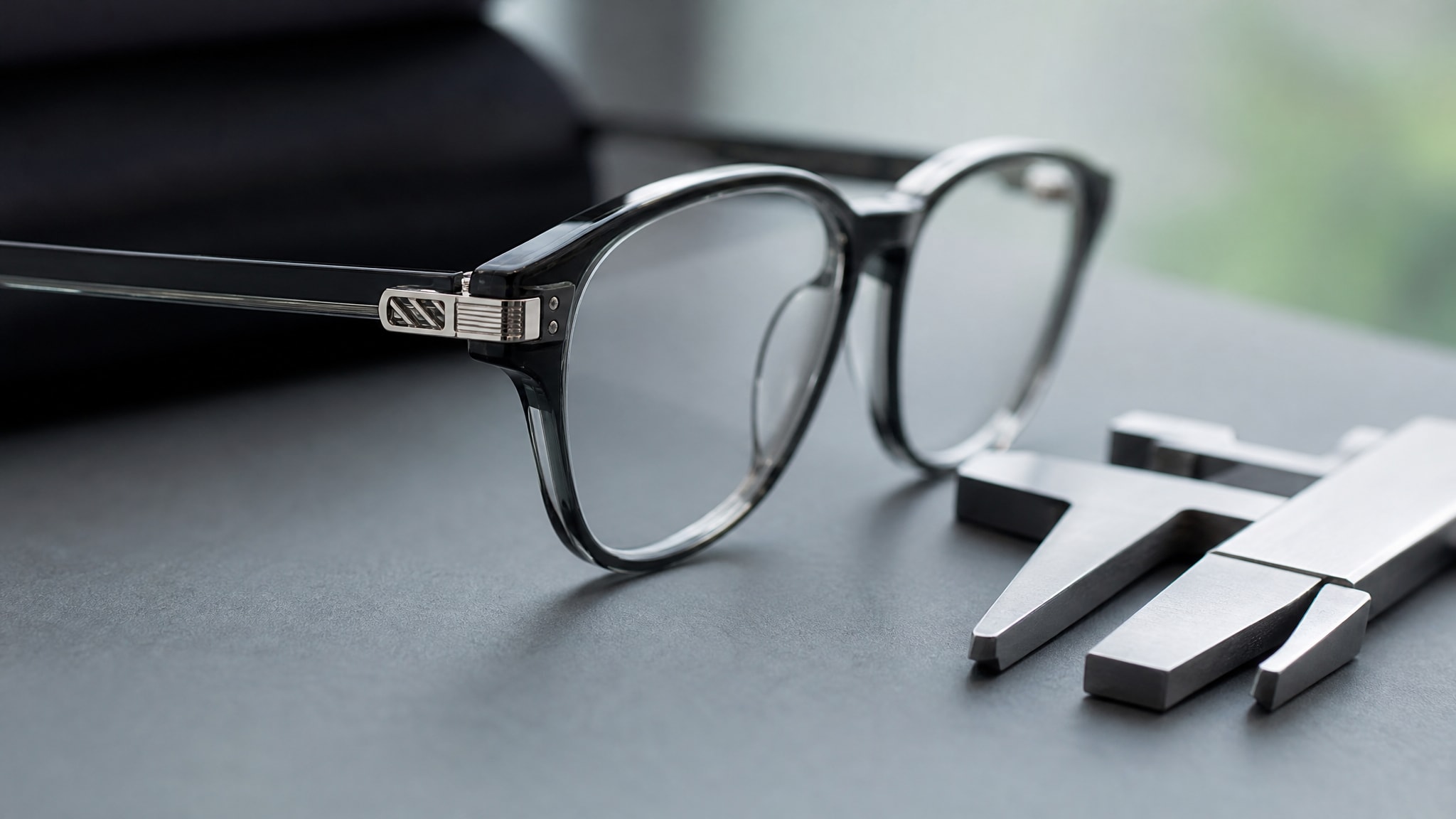
Optical frame measurements run in millimetres, in the order lens width-bridge-temple. Matching these within 1-2mm of a pair you already find comfortable is the most reliable way to size remotely. These three numbers drive physical comfort, and they tell you far more than a generic label like small, medium or large.
The first number is the horizontal width of one lens at its widest point. It decides whether the frame lines up with your pupils and your facial width. Too narrow, and you get pressure at the temples and clipped peripheral vision. Too wide, and the frame slips and looks oversized.
The bridge measurement is the gap between the two lenses, and it dictates how the frame sits on your nose. Even a 2mm difference here can shift the weight from the nose pads onto your cheeks, or leave the frame sliding all day.
Temple length is the arm, measured from hinge to tip behind the ear. Get it right and the frame stays put without pressing back into your skull. Once you understand these three figures, you’ve removed the most common reason glasses get returned.
Your best sizing tool is probably already on your face, or in a drawer. Find the three-digit sequence printed on the inner temple arm of a pair that fits you well, and use those numbers as your benchmark.
Check that baseline against any listing before you even think about style or colour. The Red Bull Rbre135 Semi Rimless Frame, for instance, lists 53mm lens width, 18mm bridge and 135mm temple length, so you can compare it directly against what you already wear.
This turns fit-checking from guesswork into simple arithmetic. If your current comfortable frame has a 54mm lens width and 17mm bridge, a new frame with near-identical numbers will fit the same way, whatever the brand.
Proportions matter as much as physical comfort. But work out your face shape with a tracing method, not a mirror and a guess at which celebrity you resemble.
Stand at a mirror with a dry-erase marker or lipstick, pull your hair back, hold still, and trace the outline of your face straight onto the glass. Step back and look at the shape you’ve drawn. Is the jawline angular or curved? Is the forehead wider or narrower than the cheekbones?
Or take a straight-on photo in neutral lighting and overlay geometric shapes to spot the dominant lines and ratios. Either way, you end up with a factual basis for picking frames that work with your bone structure instead of against it.
Softer features, rounded jawlines and curved cheekbones, generally suit frames that add definition and contrast. The AIKO EYEWEAR 2210 Full Rim Frame in Gray, with its 51mm lens width and 19mm bridge, shows how a women’s-specific design differs proportionally from a unisex frame, and its structured rectangular lines balance out roundness.
Square or angular faces usually do better with curved silhouettes that soften a strong jawline or prominent forehead. If that’s you, frames suited to round face shapes explains how circular and oval geometries create that balance.
Match this to your verified measurements before you commit. A frame that’s theoretically the right shape but pinches your temples or slides down your nose still fails, on both comfort and looks.
Material affects weight, adjustability and how long a frame lasts, and you can’t test any of that by touch when buying online. You can, though, read it off the spec sheet.
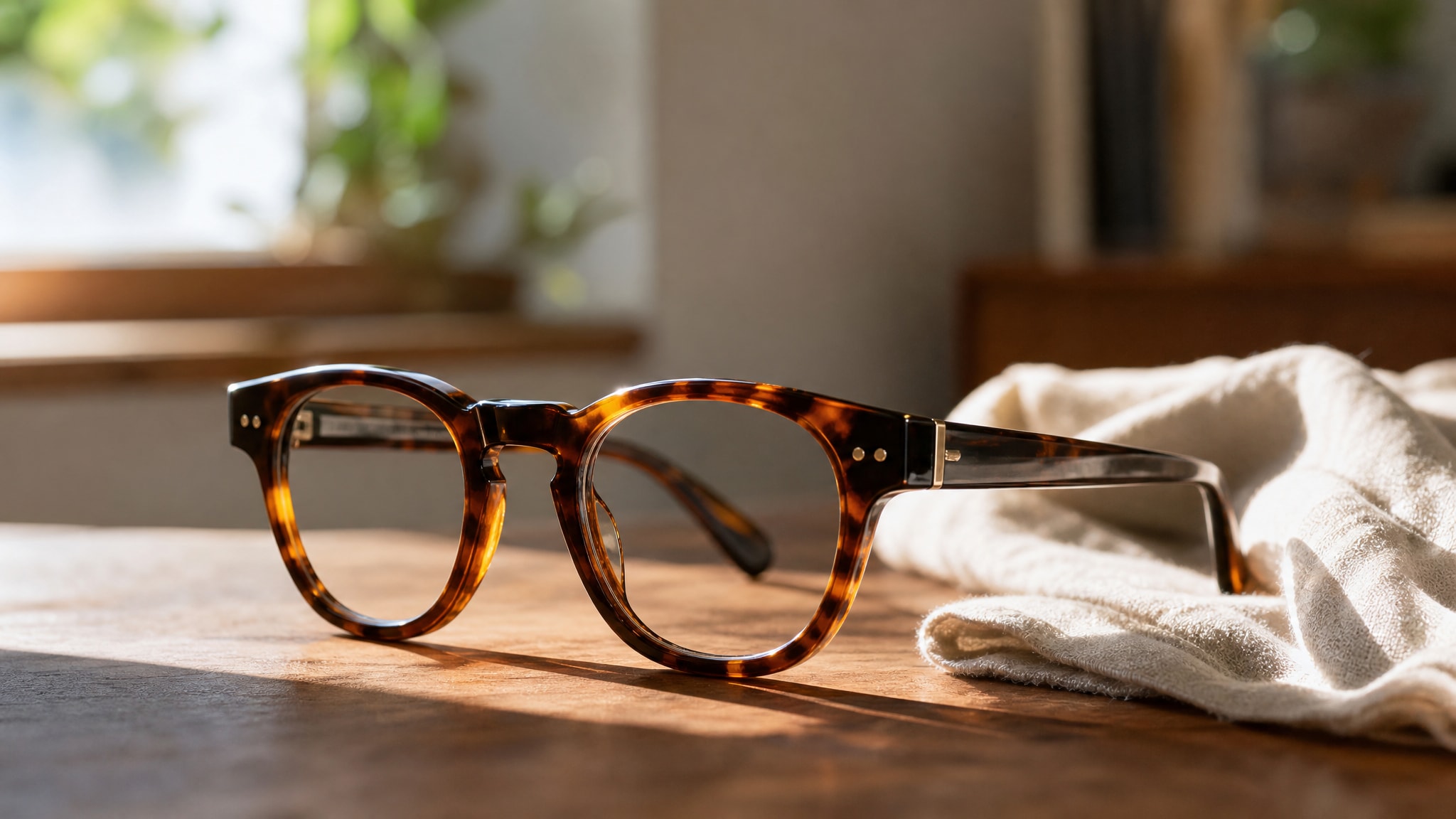
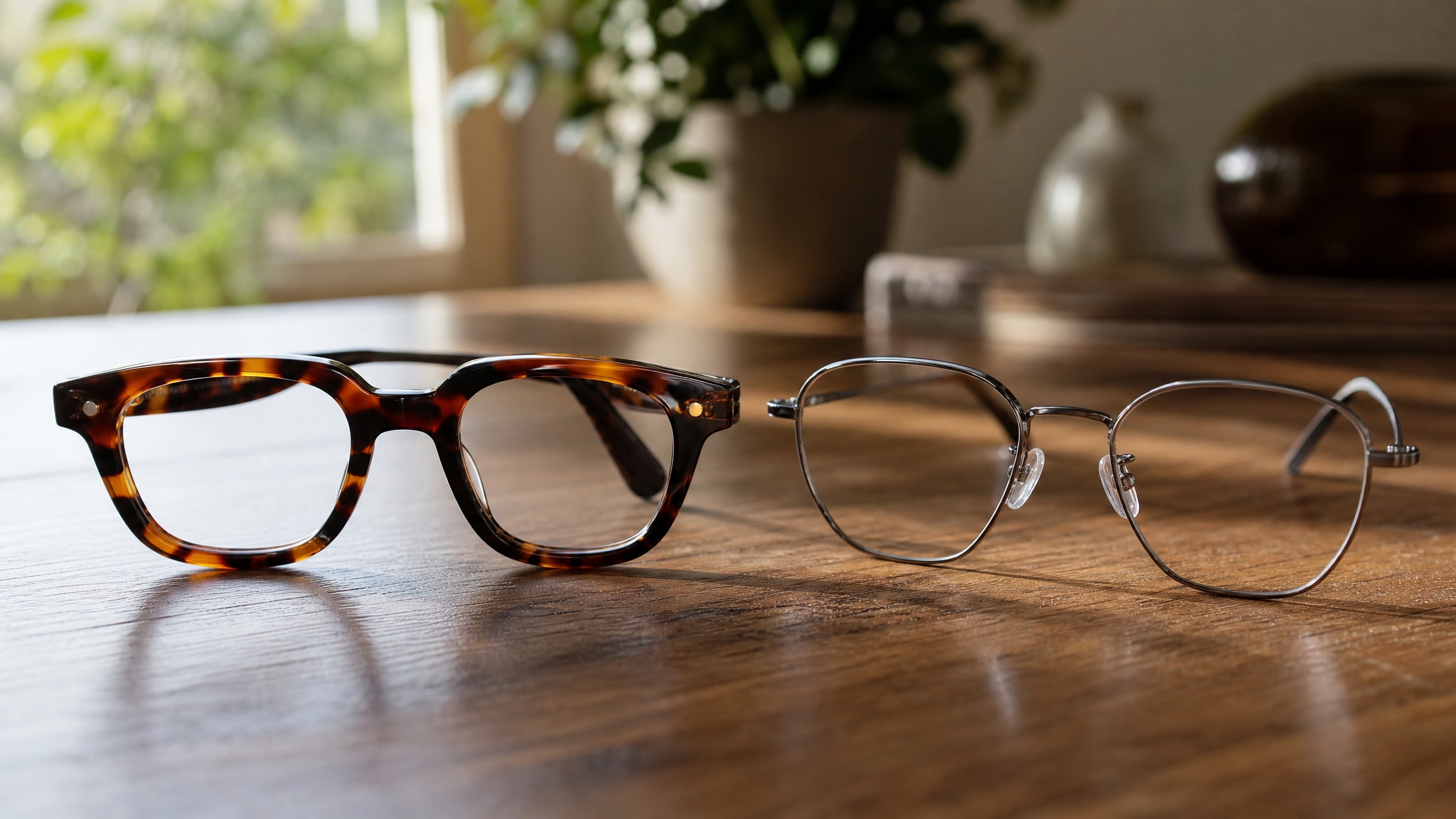
Acetate frames have real tactile presence, and an optician can heat-adjust them to your face after purchase. The Spencer Wilson Amsterdam, built in acetate, shows off the material’s depth of colour and the way it holds its shape over years of wear.
Metal frames are lighter and more minimalist, but they don’t offer the same post-purchase adjustability as acetate. For more on how the two compare, see our guide on acetate versus metal frame differences before you decide.
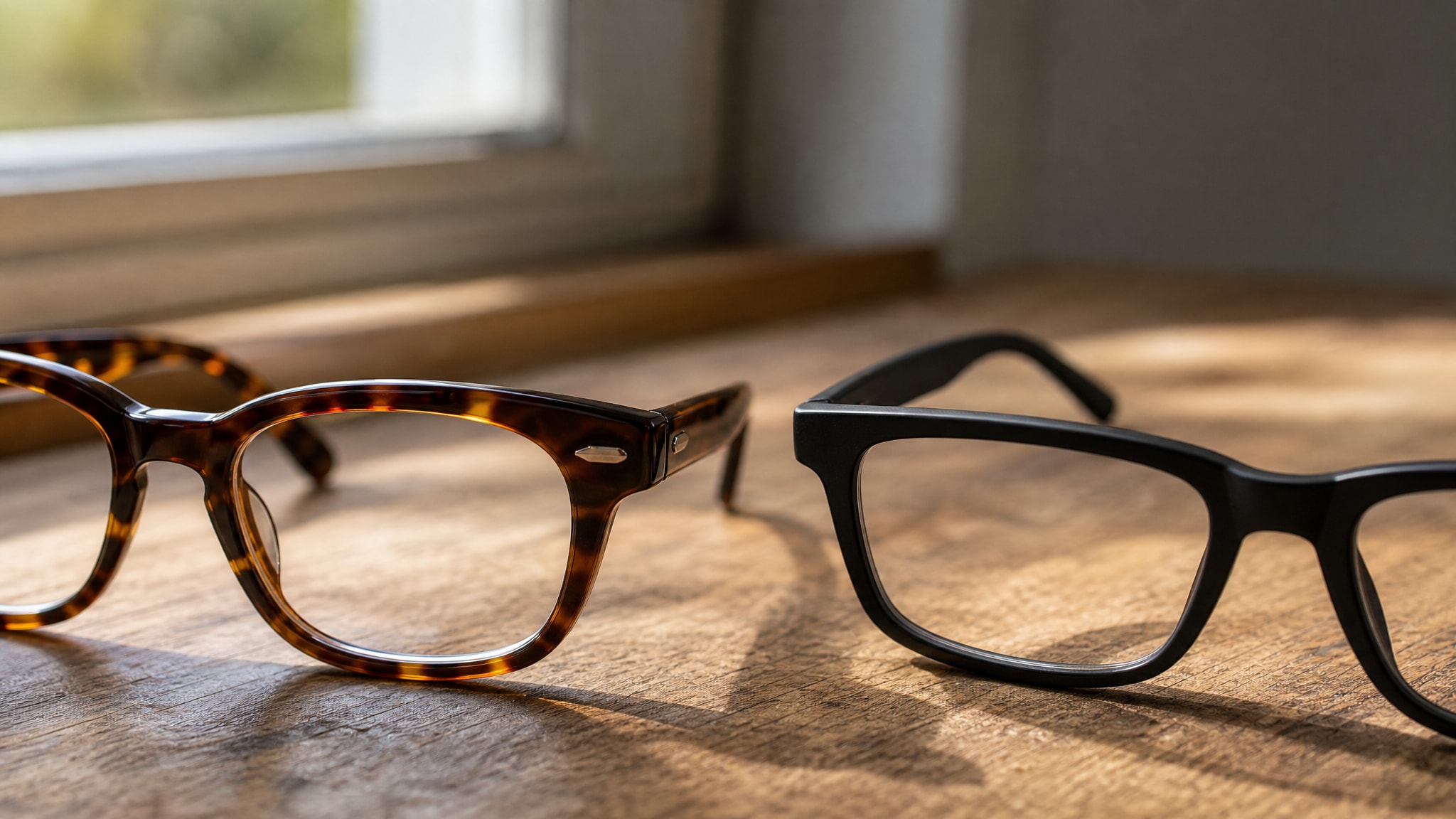
Hinge construction and rim type tell you a lot about how discounted prior-season stock will hold up. Semi-rimless designs cut weight and look modern, but they leave the lens edge exposed to chipping if you drop them or handle them roughly.
Full rim frames encase the whole lens, so they protect better and hold their shape under daily use. Check these details and you’ll end up with a frame that matches how hard you’re actually on your glasses.
Virtual try-on tools can’t simulate material weight or hinge tension. Treat them as a visual check only, nothing more.
Augmented reality try-on tools are good for scale and colour, but they have real limits. They’ll tell you whether a frame overwhelms your face or disappears on it. They won’t tell you anything about bridge pressure or temple tightness.
Use them to shortlist frames you like the look of, then run your measurements over whatever’s left. That order matters: it stops you falling for a frame that looks great on screen and fails on your face.
Virtual try-on isn’t accurate enough to decide fit on its own, it’s a style screener, nothing more. Lean on millimetre specs and the return policy when it’s time to actually buy, especially if you’re buying prescription glasses online, where lens centration depends entirely on the frame sitting correctly on your face.
Even with careful measuring and a virtual try-on, some frames just feel wrong once they’re on your face. A clear, accessible return policy is what turns online shopping from a gamble into a low-risk trial.
Check that the retailer takes returns on unworn frames within a reasonable window, and read the fine print on restocking fees or condition requirements. Know this before you buy, not after, so you’re not stuck with a frame that doesn’t work because of restrictive terms.
Also check whether a prescription-compatible frame can still be returned before you’ve had lenses fitted. Some retailers treat ready-to-wear and optical stock differently, and that matters if you’re planning to take the frame to your own optometrist for glazing.
Shipping costs add up fast if you’re testing a couple of sizes to find the right one. Free Australia-wide shipping takes the financial sting out of ordering two similar sizes to compare side by side.
It’s a practical complement to the measuring work: order on your numbers, and know that sending back the one that doesn’t fit costs you nothing extra.
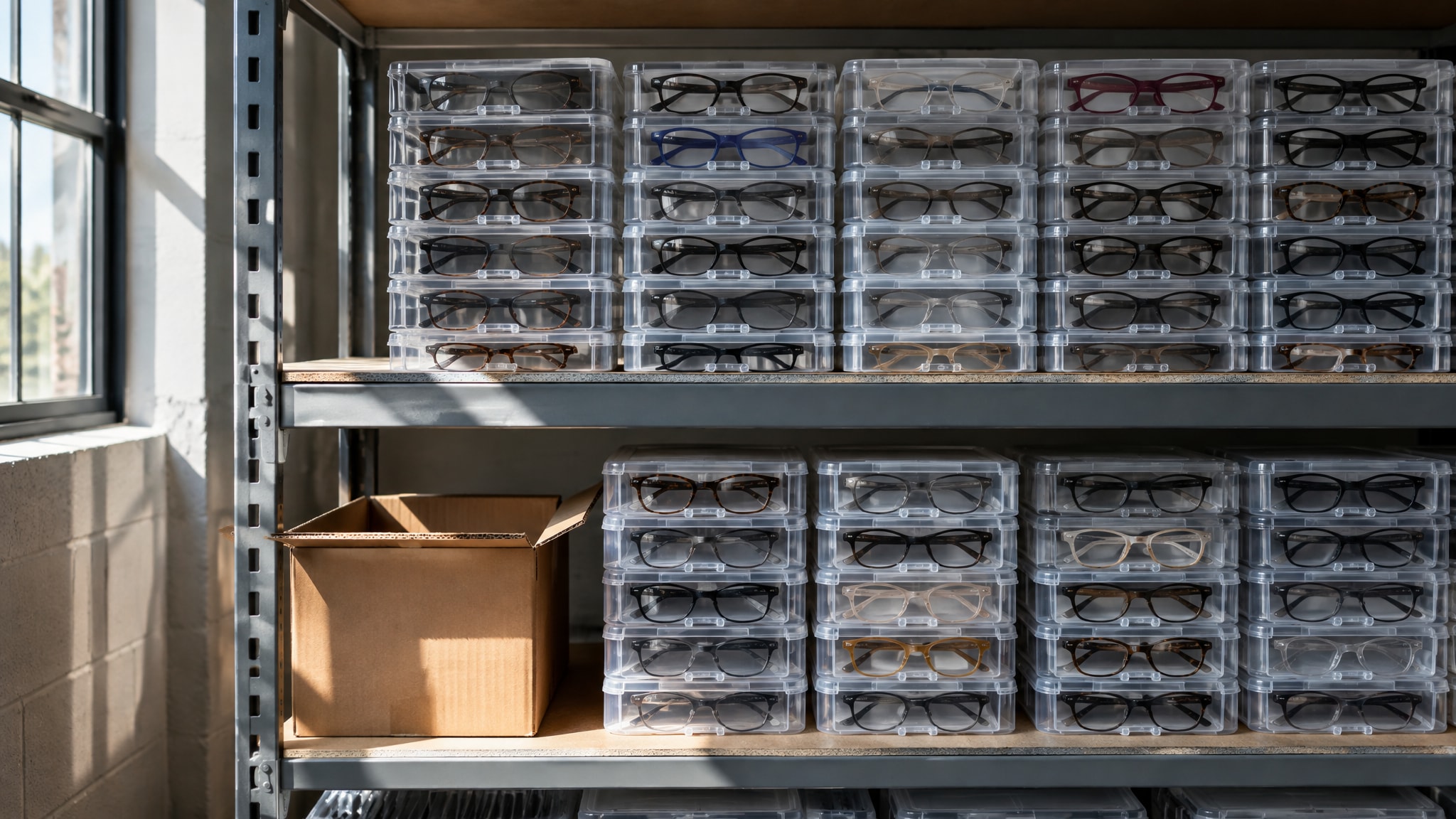
Discounted eyewear can make cautious buyers wonder about authenticity or condition. Telling genuine new old stock apart from secondhand goods comes down to understanding what “prior-season” actually means in optical retail.
Prior-season frames are made to the same standards, same materials and carry the same brand warranty as current-release versions. The only difference is the release year and where they sit in inventory. They’re new, unworn, and have sat in original packaging rather than on someone else’s face.
For more on how to check this yourself, our guide on verifying frame authenticity covers the markings and packaging details that confirm a frame is legitimate.
Optical fashion moves slower than apparel, so last year’s frames rarely look dated. Manufacturers hold quality control steady across production years, so a frame from two seasons back performs the same as one released yesterday.
That’s the value case: premium acetate builds and the same engineering, priced like entry-level current-season frames. You get the construction without paying extra for the marketing cycle.
Run through your research before you check out. Confirm your baseline measurements against the listed specs, within a reasonable tolerance, and check the style against your traced face shape.
Read the return policy one more time, so you know exactly what happens if the fit doesn’t work out once the frame arrives. If a dimension, hinge type or material detail isn’t clear, ask customer support before you buy, not after.
Measuring, comparing and verifying first turns online frame buying from a guess into a sure thing. It’s the difference between hoping a discounted frame works and knowing it will before it arrives.
Locate the three-number sequence printed on the inner temple arm of glasses that currently fit you well, representing lens width, bridge width and temple length in millimetres. Use these figures as your baseline benchmark and seek new frames matching within 1-2mm of each dimension to replicate the same fit. This comparative method is more reliable than generic sizing labels or facial measurements alone.
Most Australian optometrists will glaze customer-supplied frames provided the frame is in good structural condition and suitable for lens edging. Confirm compatibility with your chosen optical lab before purchasing, as some rimless or vintage designs may not withstand modern lens insertion processes. Ensure the frame measurements align with your prescription requirements, particularly for high-index or progressive lenses requiring specific minimum dimensions.
Square frames complement oval faces by adding angular definition to naturally balanced proportions without overwhelming the facial structure. The key is selecting square frames with softened corners rather than harsh geometric lines to maintain harmony with the oval’s gentle curves. Verify the frame width does not exceed your facial width to preserve the oval face’s inherent proportional advantage.
No consumer app can reliably scan existing lenses to extract prescription data due to the precision required for optical surfacing parameters. Prescription verification requires professional lensometry equipment available only at optical practices and accredited laboratories. Apps claiming to read prescriptions from photos cannot capture cylinder axis, prism or optical centre measurements necessary for accurate lens replication.